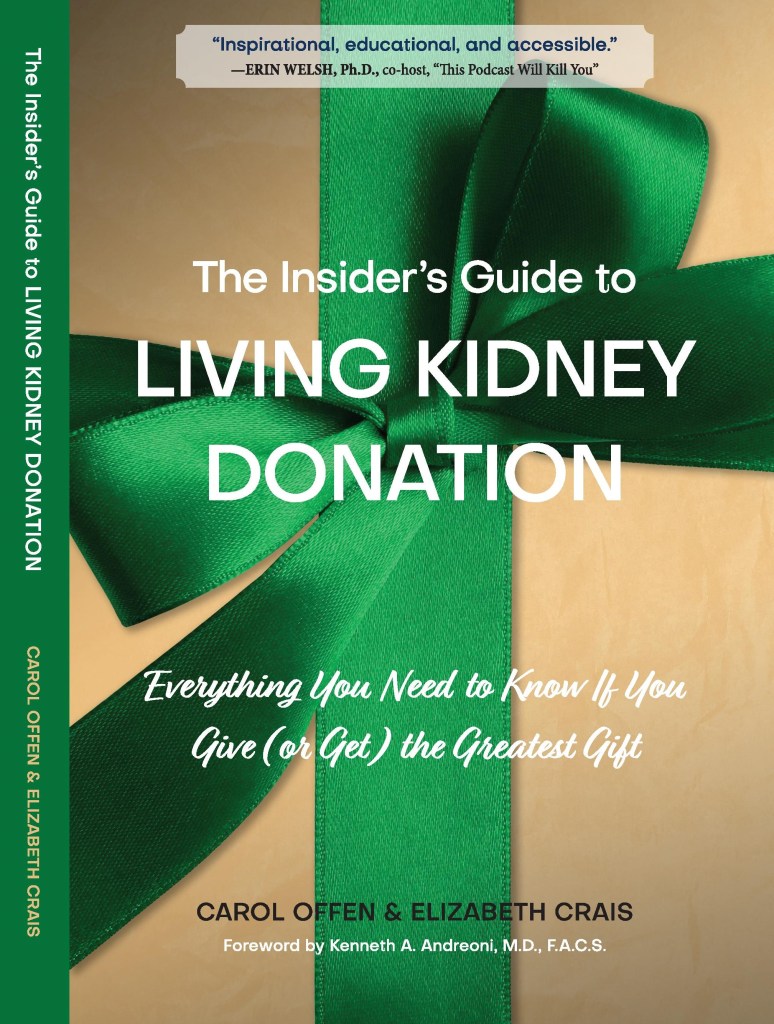
“Insider’s Guide to Living Kidney Donation”: Take a Peek Inside

As we get so much closer to publication, we’re eager to share another peek at the book. Here’s an excerpt: the opening for chapter 1!


AN OHIO COUPLE transform their van into a cruising billboard, a woman in Pennsylvania posts her blood type on Facebook, a man offers thousands of dollars online . . . These are just a few of the ways people try to find living kidney donors in this country.

Why resort to such unusual steps? The answer is simple. Today more than thirty million Americans have chronic kidney disease. Nearly 100,000 of them are on national waiting lists for a kidney from a deceased donor. About every ten minutes another person is added to the list. Meanwhile, nearly half a million people, many of whom may never be able to have a transplant, receive dialysis.

With fewer than 25,000 kidney transplants performed each year—from both deceased and living donors—most of the people on the list wait several years for a kidney: up to five to ten years in some states. That means that at least sixteen people in the United States die every single day simply because they did not receive a kidney in time.

It doesn’t have to be this way. Kidney transplants are hardly new—surgeons have been performing them for more than half a century. So why are they still helping only a fraction of those in need?

No Simple Answers

The principal reason for the long wait and the tragic deaths that result is obviously a shortage of available kidneys. But numerous factors account for that shortage. In the United States, only about 3 out of every 1,000 people die in a way that makes traditional organ donation possible— typically in a hospital following an accident— so the pool is very small. . . .


For more information about The Insider’s Guide to Living Kidney Donation–and about donation, transplants, and kidney disease–be sure to check out the website and blog archives. And, of course, sign up to be notified when you can pre-order the book.

We Need the LDPA: Best-Case Scenario Is Hardly Good Enough

The Living Donor Protection Act (LDPA) of 2021 was first introduced in Congress back in 2014 and has been making its way through successive congressional sessions ever since. The act would protect healthy living donors like me from discrimination by insurers (including rejections and higher premiums) and would protect the job of an employee who takes time off work to save a life. In the meantime, several states have tried to adopt their own, often improving on the federal version.

Photo by Sora Shimazaki on Pexels.com

My state, North Carolina, has been considering passing an LDPA for a few years, and this is the closest we’ve ever gotten. The bill has made it through two committees–health and finance–and the insurance committee is next to take a closer look. It includes not only protections against discrimination by insurance companies but also provides paid leave for state employees (I used to be one!) and tax credits.

Last month, when my National Kidney Foundation liaison asked me to testify or send a letter of support to the Finance Committee, I hesitated because my experience was not a dramatic story of financial ruin or loss of coverage. But on further reflection, I thought that mine might be worth describing precisely because it was so banal. I decided to write a letter sharing my story so that legislators might better understand what a “best-case scenario” looks like.

Here’s what I wrote:

With roughly 3,000 people in North Carolina waiting for a kidney from a deceased donor—most of them wait several years—living donors hold the key to reducing the tragic kidney shortage. Fifteen years ago this month I donated my kidney to my adult son. I would do it again in a heartbeat, because he’s my child. If we want to encourage and support people with less personal motivation to donate—friends, neighbors, colleagues, faith-community members—we need to start by eliminating the many disincentives.

My family was fortunate to live close to one another and near the UNC transplant center. Many people live hours from a center and have to devote a full day going to appointments or visiting at the hospital. I had a smooth recovery and could have gone back to work in 2 or 3 weeks if it were just a matter of my own health. But like so many other living donors, my recipient was a family member, so I was also a caregiver. My family was devastated when our son needed emergency surgery a week after his transplant. His recovery was slow, and he lived with us for about 2 months. I missed work for much of that time.

My husband and I shared family responsibilities that included our other child–a teenager with her own adolescent needs–and my elderly father, whom we had moved down to our town. We both maxed out our paid leave time. With my job, again I was fortunate: I had a supportive supervisor, short-term disability leave, and an employer with a shared-leave policy that enabled my kind colleagues to donate their leave time. I cobbled together partial coverage. My husband did not have the benefit of shared leave donations. Not many potential living donors have such luxuries. In fact, many of the people on the transplant lists have low incomes, and many of their families and friends have little ability to ride out periods of missed pay. So these patients languish on the wait lists still longer.

Personally, I was never discriminated against for life insurance, but I know healthy donors who have been turned down by multiple companies or have seen their rates go up.

My son was very lucky to have a live donor. If I hadn’t been able to donate to him after he’d spent nearly 2 long years on dialysis, he could have faced another 5 years tethered to a machine 3 times a week, draining his energy, his time, and his spirit. Incidentally, you may not know that the 5-year survival rate on dialysis is only a little more than a third.

My family’s story is what a best-case scenario looks like. At an extremely difficult time for our family, we at least had everything going for us: our location, adequate resources, and a supportive employer. I implore you to help someone else’s son avoid that long, dangerous wait for a donor by doing whatever you can to protect living donors and remove disincentives for donation: please support and expand the NC Living Donor Protection Act.

If your state is looking at such a bill, consider similarly telling your story–whether you’re a living donor or a family member.

For more information on this and related subjects (and to learn more about my upcoming book), please explore the blog archives and the rest of my website at kidneydonorhelp.com


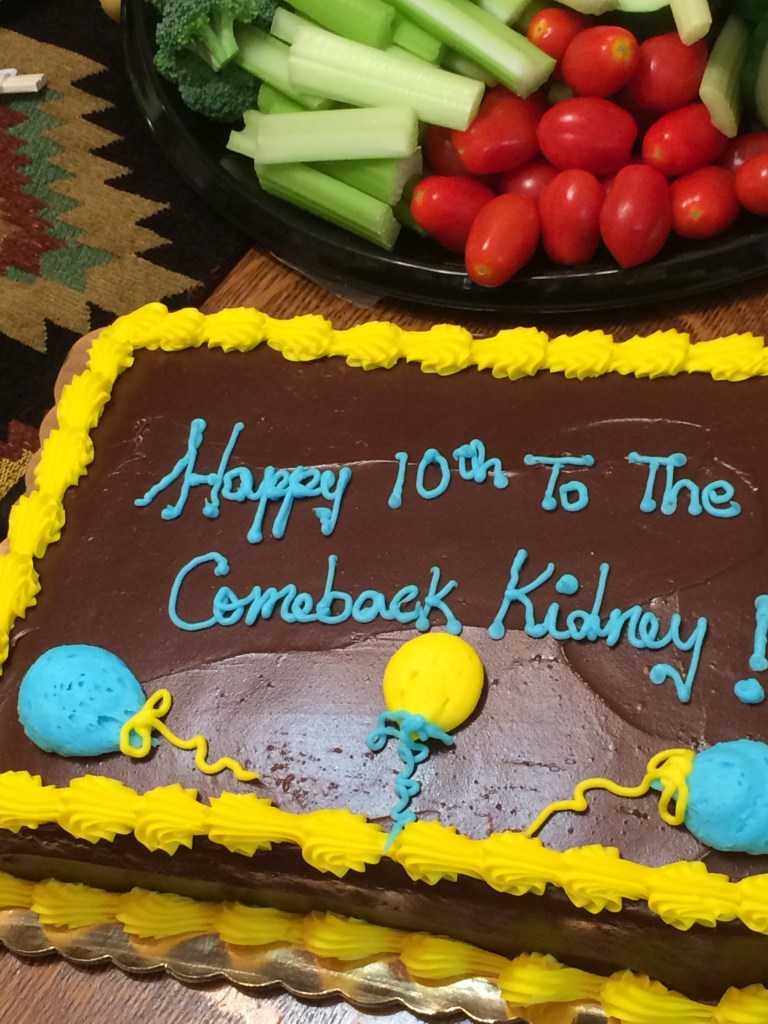
Happy 15th to The Comeback Kidney!

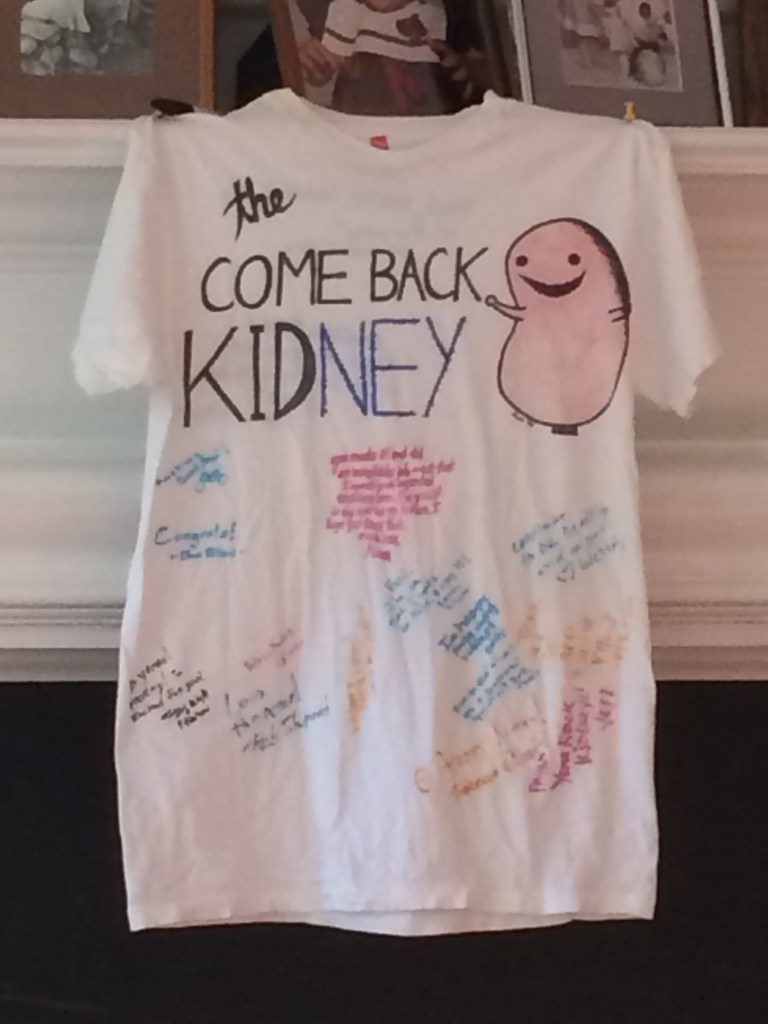
We’ve been celebrating the anniversary of the day I donated my left kidney (yes, we named it The Comeback Kidney) to my adult son, Paul, every year.

Sometimes with a big party:

And a few fun mementos, courtesy of Paul’s sister, Nora:

Sometimes with whatever we could manage, as in 2020 when we were dealing with COVID and a few other “inconveniences”:

But we never failed to mark this very special occasion, the day that gave Paul a new lease on life–almost literally–and planted the seeds that gradually sprouted into my donation advocacy.

Now, here we are at Number 15! The Comeback Kidney, thankfully, is still going strong, and my humble remaining kidney is doing great, so we have much to celebrate. Though there was no big party, we were able to enjoy a lovely dinner at a favorite restaurant followed by an updated version of the cake.

It was an extra treat to be able to share it– indoors–with a couple of good friends, who thoughtfully presented us with the most appropriate kidneyversary gift of all: a donation to the charity of our choice.

After all, attention must be paid. (And please pay attention to your own kidneys–be sure to have your kidney function checked at your next check-up.)

Have You Heard This One?

As someone who’s always tried to find the humor in serious situations, I can attest that even kidney donation can include some laugh-out-loud moments. I know I’m not alone, as I wrote last year in a blog post on hilarious questions and comments that fellow living donors on Facebook have heard. Example: “OMG, they didn’t wait till you died?!”

In my own experience as a donor (and mother of my recipient), moments that didn’t seem remotely funny at the time have since emerged as gems. Example: A young technician did an ultrasound to try to locate my adult son’s internal bleeding a week after his transplant. After the surgeon and radiologist came in and concluded that he needed exploratory emergency surgery, everyone headed out somberly. The tech sent them on their way with a perky “Have a nice day, y’all!”

Photo by Teona Swift on Pexels.com

Then there was the time, while my son was recuperating from the surgery at our house and I was being super careful to protect him from exposure to germs. I’d hidden my bouquet of flowers in our bathroom and thought everything was going great–till I discovered that he and our teenage daughter had unwittingly been sharing a toothbrush for a week.

If you have some real-life donation-related chuckles to share, please let me know!

Live Radio Looks at Live Donation

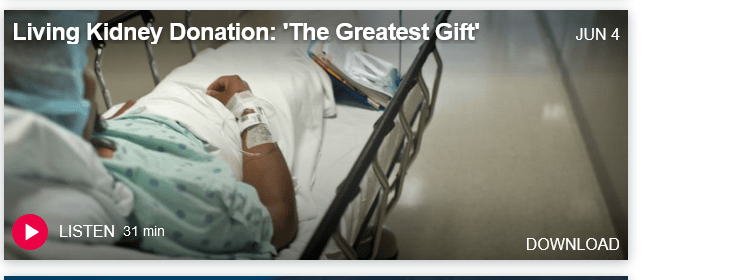
As our book’s publication approaches, and Betsy recovers from her recent dual transplant (17 years after her first kidney transplant), I’ve started receiving interview requests. Last week we were invited to be on San Francisco’s NPR affiliate KQED’s live radio show, The Forum. Since Betsy was still in the hospital, I was solo for the episode, Living Kidney Donation: The Greatest Gift. It was exciting to hear a radio host say for the first time, “We’re talking with Carol Offen, co-author of The Insider’s Guide to Living Kidney Donation.

Just as exciting–and far more significant–was that a popular live radio show was devoting 31 minutes of airtime to talk personally and informally about kidneys and living donation: vitally important subjects that deserve lots of attention.

The host, Lesley McClurg, asked me to share my story of donating my kidney to my son nearly 15 years ago. That I would donate again in a heartbeat is a testament not only to the dramatic difference it made in his life, but in my own as well. It’s an extraordinary feeling to know that you’ve enabled another human being–whether a loved one or a stranger–to live a fuller, normal life. The experience made me passionate about raising awareness of living donation and chronic kidney disease.

I was honored to share the Zoom stage with Dr. Nancy Ascher, a prominent UCSF transplant surgeon (for starters, she’s the first woman to transplant a liver) and a living kidney donor herself. It was great that she could speak to both the medical and the emotional aspects of donation, and the host engagingly integrated our overlapping perspectives.

I was surprised to hear Dr. Ascher say that she hadn’t thought about the risks when she made her decision to donate to her sister. In retrospect, I realized that, even though I’m a wimp, I didn’t really think about those things either (though I strongly advise prospective donors to fully inform themselves). Sure, I was scared, but I was just as freaked out about the battery of tests for the donor evaluation as I was about the surgery.

The Forum is a morning call-in show, and several listeners shared their own stories of donation or transplant. Some were very powerful. I’ll never forget the gentleman who called to thank Dr. Ascher for performing a liver transplant 20 years ago that gave his wife 17 additional years of life. His voice broke as he described the special experiences she’d enjoyed during those gifted years.

A kidney recipient, Tameez Sunderji, also joined the show to tell about receiving a kidney from his sister eight years before. His kidney failure, like so many others, was discovered by chance before he had any symptoms. He was very fortunate to be able to have a preemptive transplant–that is, before he ever needed dialysis. Both he and his sister are doing well.

A few other callers who were living donors themselves described their active lifestyles since donation and what a gratifying experience it had been for them. Some listeners called in to ask Dr. Ascher whether they could be donors despite being over 60 and whether insurance would pay for a mother-daughter liver transplant (short answers: yes, if very healthy; yes, recipient’s insurance pays for both).

A couple of months after participating in a podcast episode on transplantation, I was blown away when a Facebook commenter told me that “Your story on This Podcast Will Kill You was the final push I needed to register to donate. I find out today if I’m approved! THANK YOU!!!!” I teared up when I read it, of course–and even moreso a few hours later when she announced that she’d been approved to be a nondirected donor (for someone she may never meet).

I like to think that learning about the compelling need for living donors and hearing our personal, candid stories on The Forum spurred some listeners–including host Lesley McClurg–to consider the idea of being a living donor in a new, encouraging light.

“The Call”!

Big news: My friend and co-author, Betsy Crais, just got “the call” she’s been waiting for ever since her first (live-donor) transplanted kidney failed more than a year ago–after 15+ years. She is now the proud and very grateful recipient of a healthy kidney and a liver from a deceased donor. She is recuperating well.

Just the week before, she and her husband were en route to the beach, nearing the end of a 3-hour drive from home, when she also got the call. They excitedly turned the car around and headed back, arriving at the hospital a few hours later. She knew there was a chance she might not get those organs, because she was cautioned that she was an alternate in case the primary candidate wasn’t an acceptable match. The main candidate was fortunate that day, and Betsy went home empty handed, so to speak.

Still, it was very encouraging to get that close, after fearing that a second transplant could be years away for her. Thankfully, this time Betsy was the primary candidate and was a good match.

Recovery will take time, but Betsy always has her eyes on the prize, and she’s mainly thinking about getting stronger, leaving dialysis behind, and enjoying an infinitely better quality of life. She’s also looking forward to finally taking that beach trip or a mountain getaway this summer. In the meantime, she’s “coming along slowly but surely.”

And I sincerely hope that the grieving donor family somehow knows, as I do, that Betsy will take excellent care of their loved one’s precious organs.

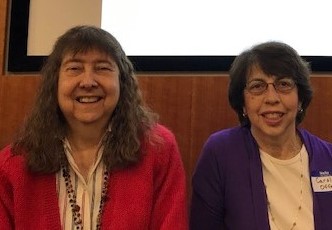
This was taken at a National Kidney Foundation patient workshop we spoke at a few years ago, when Betsy’s first kidney transplant was still going strong.

Still Reaching Beyond Our Grasp…

I’m proud and excited to unveil our book’s beautiful cover. We believe it strikes just the right tone and look (given the heavy subject matter, we had to walk a fine line between too somber and too cutesy). The designers did a great job.

That the gift-wrap concept was inspired by my dear friend and former colleague Barbara Williams Ellertson is a special bonus. Barbara gave me my first job in book publishing at a small press, back in the 1980s. Before then my experience was in magazines and in feature writing, so book publishing was a whole new world. Barbara set the high standards that stayed with me.

I’ve been thinking about those days this week as I find myself, decades later, navigating digital page proofs of the book when I long for the comfort of galleys and repros. (On the other hand, I never would have been able to share the cover this way back then!)

In recent years Barbara and I have each followed our passion. You know about mine, of course: advocacy for kidney donation through this website, the upcoming book, and activism. Barbara’s passion combines her love of books with her love of art history, and she’s made a significant contribution to the field with the BASIRA (Books as Symbols in Renaissance Art) Project.

The Insider’s Guide to Kidney Donation will be out this summer and I hope will have a lasting impact, as will the BASIRA project. It’s funny where an idea, a passion, and a long reach can lead.

Vaccinated But Still Not Protected?

Like most people, I’m excited to see the relaxed CDC guidelines about fully vaccinated people being able to participate in so many vaguely familiar activities: dinners with friends indoors, movies that aren’t on our home screen, indoor Zumba classes, and on and on.

Yet for my son and many thousands of other immunosuppressed individuals, those still aren’t real options. Yes, he’s fully vaccinated, but the big unknown is whether he’s fully protected. His immune system, tamped down to coexist with his precious kidney, which used to be mine, doesn’t quite get the difference. That means it might not be protecting him the way it does most people following vaccination.

Photo by Alena Shekhovtcova on Pexels.com

According to new studies by researchers at Johns Hopkins, about half of transplant recipients developed antibodies to COVID following the requisite post-vaccination period. That’s the good news. The bad news is that half didn’t. And even those who did, usually produced far lower levels of antibodies than someone with a typical immune system.

Researchers are looking into the other ways the body can protect itself (B cells and T cells, for example), additional options like a third shot, and much more that I don’t understand. But in the meantime, the bottom line is that unless a given transplant recipient is confirmed to have an adequate level of antibodies, they should behave as if they’re unvaccinated–that is, they may still be vulnerable. After the long months of waiting his turn to get the vaccine, and then counting down to the full-protection stage, the news was heartbreaking.

I guess it shouldn’t have come as a surprise to me, but I honestly don’t recall ever hearing or reading any cautionary statements on that point. The focus, understandably, was on safety: it’s safe for transplant recipients to get the vaccine because it’s not a live vaccine, and the known risks of kidney patients’ developing a severe case of COVID are far worse than any risks of the vaccine. I echoed that advice here too.

For now, the best protection against COVID for my son and other transplant recipients–or anyone with a weakened immune system–is for the rest of us to be fully vaccinated. If you are not vaccinated, please honor the honor system and continue to wear your mask and to social distance. At-risk people like my son need to continue to take the old precautions. So the next time you see someone wearing a mask in public, don’t just assume that they’re not vaccinated. That person may well be fully vaccinated–but still not fully protected.

So How Unlikely Is It for a Donor to Later Need a Transplant?

In a word: very. Yes, it’s crucial to consider the what ifs when contemplating something as important as living donation. And yes, later needing a transplant is more likely for a donor than it is for a healthy person who has never donated. But here’s the bottom line: there’s about a 1% chance on average of a living donor later needing a kidney transplant.

Apparently, that surprises people, particularly living donors. My post on the subject received the highest number of views of any of my posts. Needless to say, the news made a lot of people, including me (now nearly 15 years post donation), very happy and eager to share the good news.

Photo by Andrea Piacquadio on Pexels.com

“B Positive” Edging Closer to a B+

Back in December, I surprised myself by admitting that I actually liked–even if not loved–this unlikely new sitcom about a guy needing a kidney. I was willing to give it the benefit of the doubt and encouraged others to watch for signs of improvement or offer constructive feedback.

B POSITIVE stars Thomas Middleditch and Annaleigh Ashford encourage people to consider becoming a living kidney donor in a new PSA produced by CBS and the OneLegacy Foundation. (Photo: Business Wire)

Before I got caught up on the several episodes I’d missed, a major public health campaign came along last month (National Kidney Month), and I was delighted to see B Positive in the spotlight.

CBS teamed up with One Legacy Foundation to raise awareness of living donors, with BelikeGina.org. A brief PSA featuring the show’s two stars directed viewers to the site, which provided facts and personal stories about being a kidney donor. The site had links to several organizations that partnered for this wonderful effort. The result was an array of thorough information for everyone from the curious to the fully committed–and most people in between.

Dozens of the people who clicked on the link actually filled out an interest form about living kidney donation (the link is still live)–and a few even began the process to donate their kidney. Not bad!

Getting back to the sitcom itself: I’m happy to report that I think the writers have come a long way. So, does it earn a B+? You tell me.

First of all, the characters are much more multidimensional than they were in those first few episodes. Drew shows even more vulnerability. Over-the-top Gina, though still zany, has become more nuanced. Even Drew’s dialysis mates have fleshed out as real people. The aloof, cynical Samantha now occasionally shows a softer side; Jerry is more relatable; and Eli, the former NFL star, shows that he cares about more than his championship ring. In short, they are no longer reduced to punchlines.

I’m also glad to see that Gideon, the flamboyant gay dialysis tech who typically has one-liners, is capable of rising to the occasion. We’ve seen him react responsibly and even empathetically when his patients needed that TLC.

I’d initially criticized the seeming routineness of Drew’s dialysis sessions, but a few scary and realistic events occurred and became teachable moments. They led to a terrific double episode that combined some realistic consequences of missing dialysis with hilarious sitcom humor.

No, kidney failure isn’t funny, but people in most any situation can do and say funny things. I, for one, am glad to see viewers exposed to–and yes, laughing about–some of these unusual but important topics. They’re more likely to remember what they “learned.” Yes, the show is still uneven, but what series isn’t? I look forward to more episodes.