
Last week was quite a memorable one, jam-packed with kidney-donation milestones and special events.
First, on June 27, my husband, son/recipient Paul, and I marked kidneyversary no. 17 with our traditional celebratory dinner out (no, no special cakes–we save those for biggies like nos. 10 and 15).
Next, two days later found me in New York City at—of all places!—the Plaza. The occasion was the lavish National Kidney Registry Awards Gala honoring living donors, with a champagne reception followed by a delicious sit-down dinner in a gorgeous hotel ballroom.
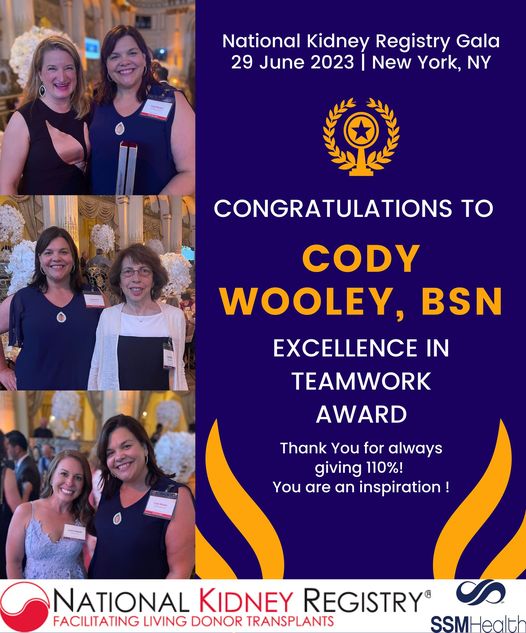
I was one of more than a hundred living donors, plus donation professionals, attending from all over the country. One of the dedicated professionals I got to chat with was Cody Wooley, a very engaging donor coordinator from St. Louis University Nephrology Division. Cody was actually one of the professionals honored, and I was delighted to have my photo taken with her before she received the award.
NKR is the world’s largest paired-exchange (aka “kidney swap”) program. Founder/CEO Garet Hil (a living donor himself) started the nonprofit following his family’s desperate search for a matching kidney for his young daughter in 2007.
Since then NKR has facilitated more than 7,000 living donations.Its goal is to increase and improve living donation while removing all the disincentives to being a donor. Here are just a few of the “what ifs” that NKR has successfully addressed, largely through its Donor Shield protections:
… a family member later needs a kidney at some unknown date? Living donors can receive a voucher for their intended recipient to get a kidney months or even many years later.
… I can’t afford the lost wages and extra childcare costs while I’m recovering? Donor Shield reimburses donors up to $17,000 (up to $12,000 for lost wages and up to $5,000 for travel/lodging and dependent care costs).
—I need a kidney transplant myself one day? Living donors through NKR have priority for a living kidney should they ever need one. (Note: Of the 7,000-plus living donations it’s facilitated, NKR has never had a donor need one.)
In addition to the dinner and the impressive stats, the evening included dramatic video presentations on (and talks by) super-athlete living donors who have done multiple marathons, ultramarathons, and summit climbs. The memorable takeaway, of course, is that donating a kidney does not mean a change in an active lifestyle. Full disclosure: most living donors are more like you or me (a healthy daily walker/zumba fan) than an ultramarathoner–but the point is that those who were runners or swimmers or whatever before donation can certainly continue to exercise their passion (other than contact sports) with just one kidney.
Then, on June 30, I attended the National Kidney Donation Organization‘s living donation symposium. There I learned so much exciting new information about kidney transplants that I’ll cover it in a separate post. Stay tuned!
For related posts, resources, and information on The Insider’s Guide to Living Kidney Donation, be sure to explore the rest of my website.










 Could You Be a Kidney Donor? What to Expect If You Give the Greatest Gift