Kidney Advocacy 101

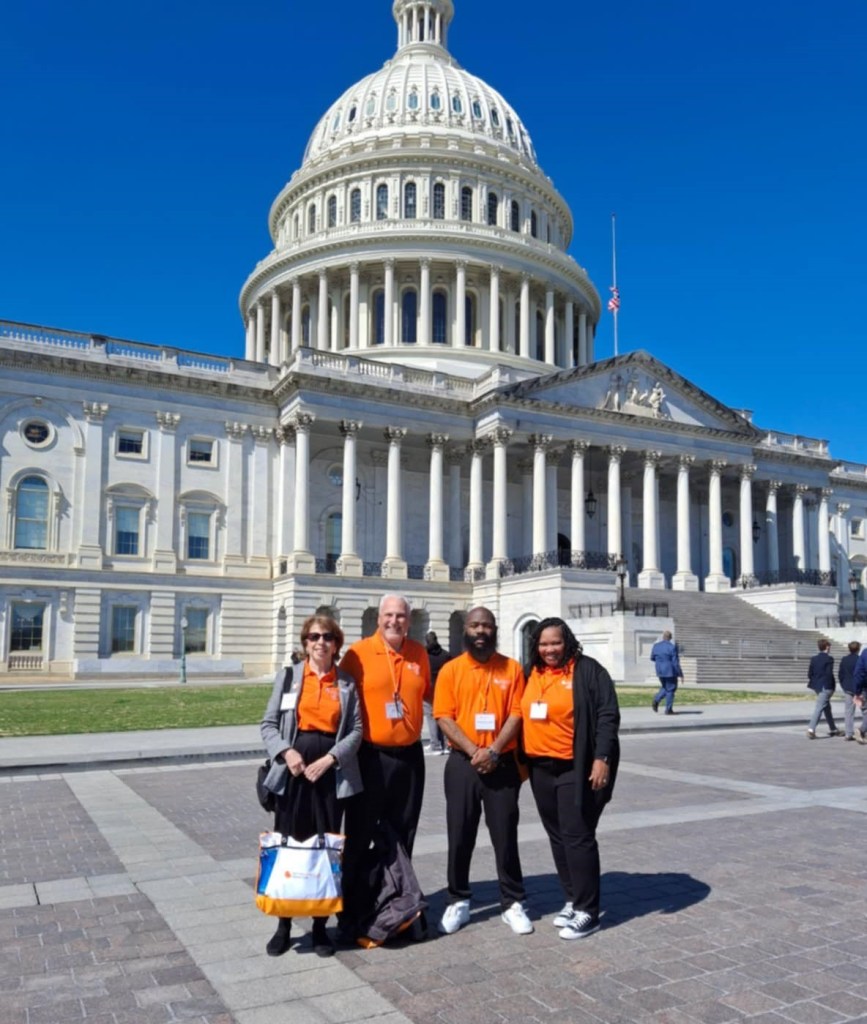
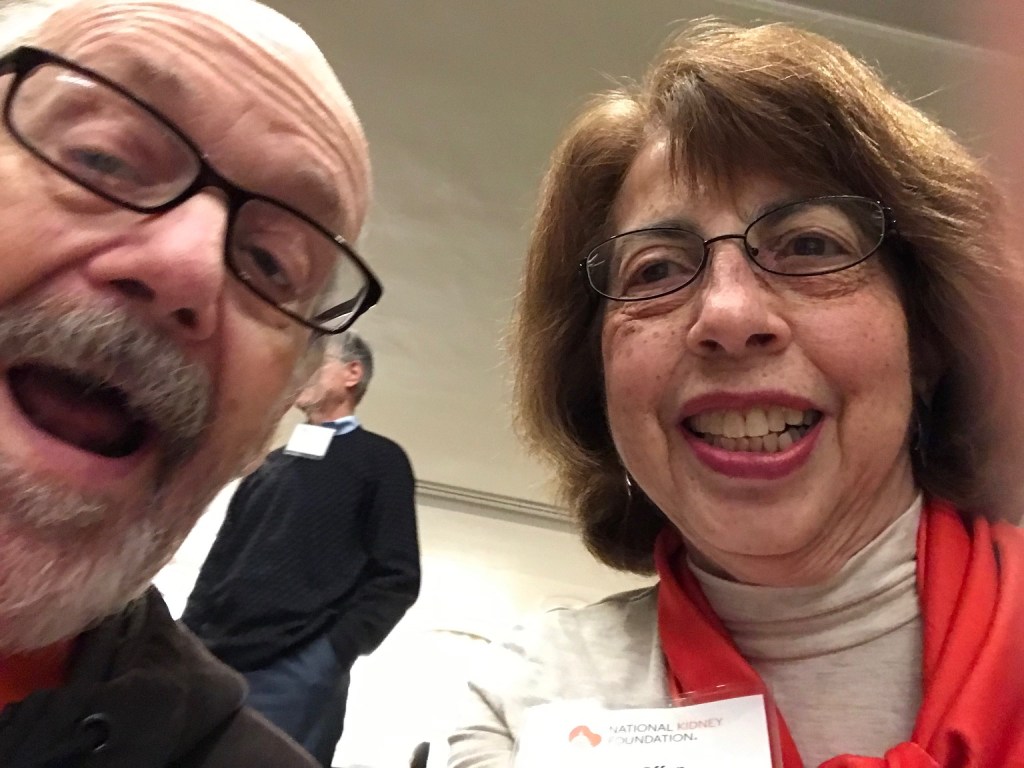
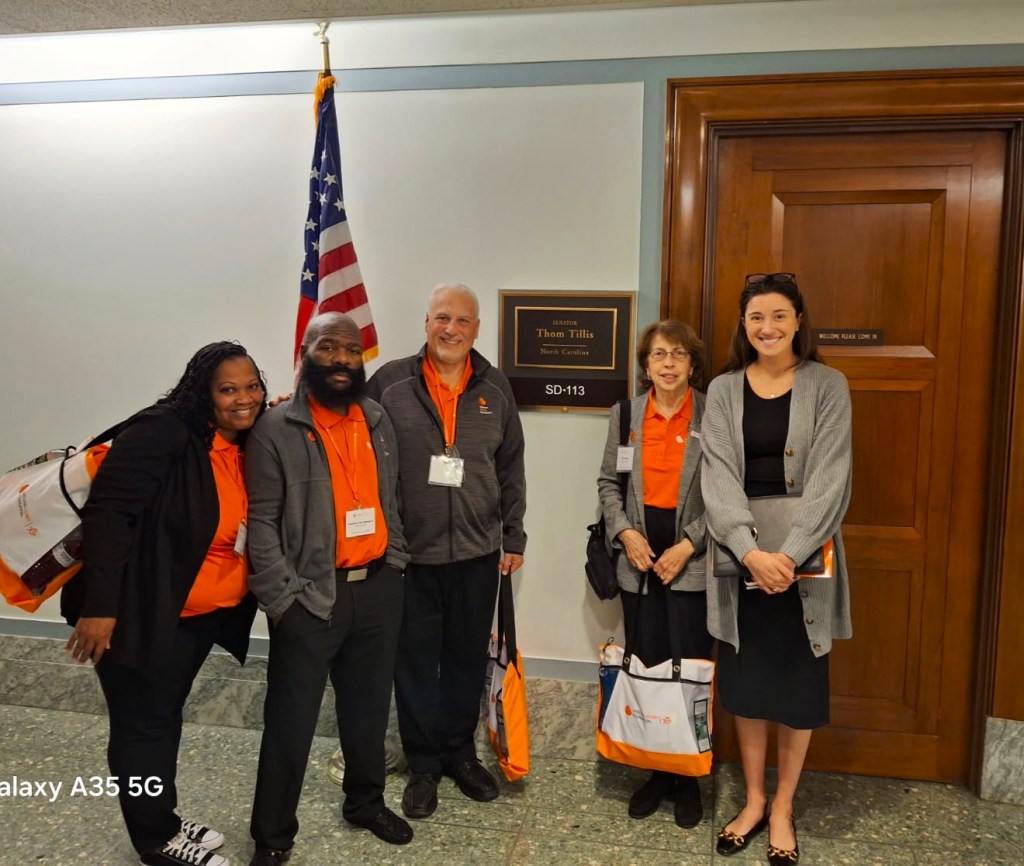
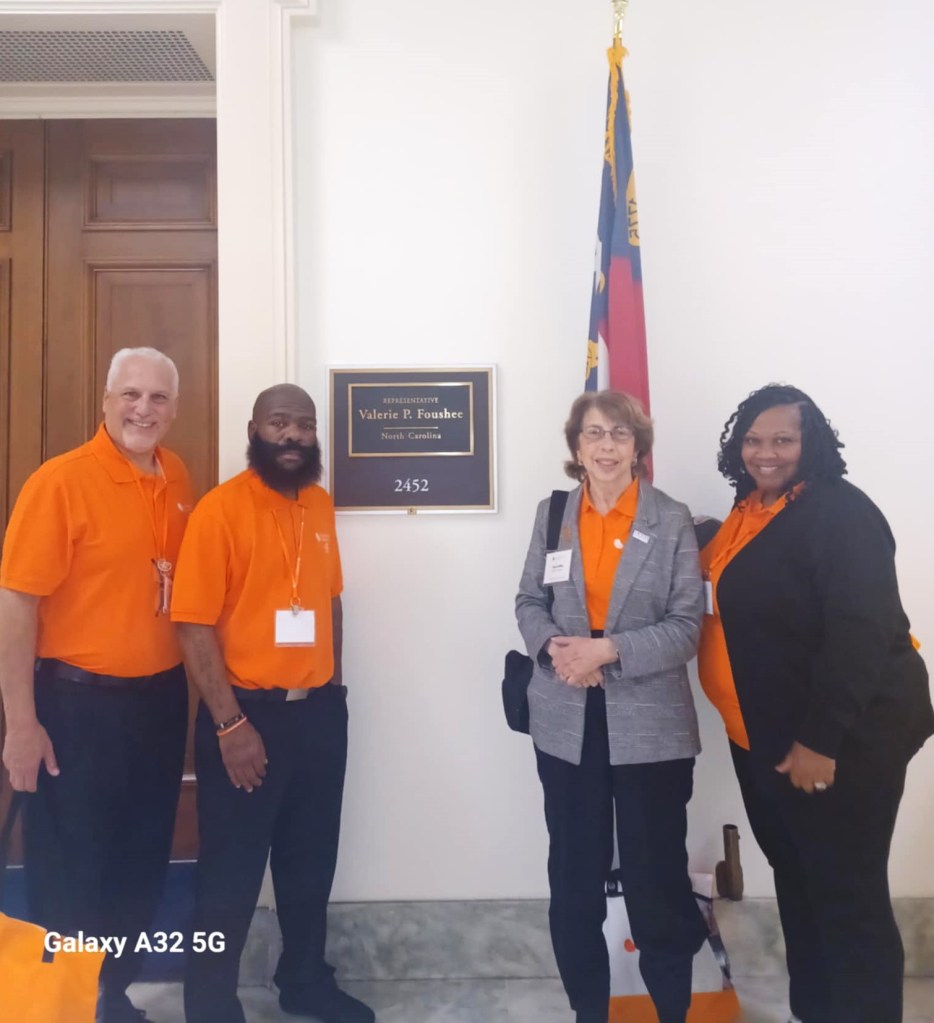
I just came back from Washington, DC, where I participated in in-person meetings on Capitol Hill–for the fourth time–to discuss ways that Congress can and must support the kidney community. As I type these words, I realize that the kidney community may sound like a small portion of Americans, a discrete segment of the population.

Unfortunately, that’s hardly the case.

Numbers typically don’t leave a lasting impression on most of us. Reading the oft-repeated statistic that 37 million people in this country, one in seven, are estimated to have chronic kidney disease starts to lose its shock value. Dramatic as that is, however, it’s usually followed by the shocking statement that 90% of them don’t know it.

It’s likely that you know someone who’s among the people in that estimate–maybe even a loved one.
Before my son was diagnosed with chronic kidney disease about 20 years ago, my family thought, like many, that kidney disease was something that just happened to other people. Not true, of course. And when people hear that my son’s condition was caused by a strep infection, they quickly realize that what happened to our family could happen to any family.
So our “asks” for Congress this time were threefold:

–Support the sweeping and way-overdue modernization of the antiquated and inefficient organ allocation system with funding: $67 million (the bill authorizing the modernization was passed in 2023).

–Co-sponsor the bill to expand and improve access to home dialysis (introduced in the last session of Congress but needs to be reintroduced in the new session).

–Support a brand-new and much-needed initiative to expand education and screening for kidney disease. Right now kidney patients don’t get thorough counseling until Stage 4 of chronic kidney disease–that is, just before their kidneys fail in stage 5. Early screening and detection for everyone is vital in catching declining kidney function in the early stages, when it’s still treatable.

So whatever the particular legislative “asks” at a given time–and whether I go to Capitol Hill as part of a delegation from the National Kidney Foundation, as I did last week, or the American Kidney Fund, as I did last May–my advocacy has a very simple goal.

To keep this vital topic on Congress’s radar. Because it’s in virtually everyone’s interest.

For related posts and information on my book, The Insider’s Guide to Living Kidney Donation, be sure to explore the rest of my website and my articles at Medium.com/@caroloffen.
AKF Summit: Spotlight on My Fellow Advocates

When surveyed about “the best part” of a kidney summit, I almost always find myself replying “my interactions with other advocates”: meeting new ones, finally meeting in person the individuals whom I knew only online but already considered friends, and of course seeing familiar faces from previous summits and events.

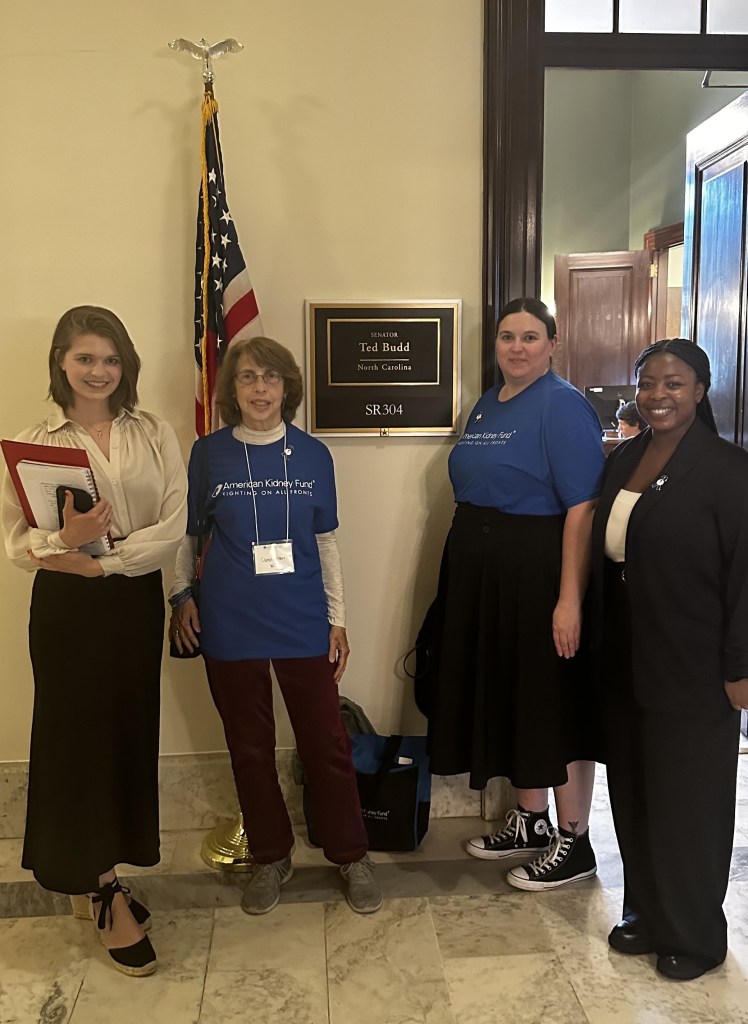
Natalia Brama, far left; Ama Sakyi far right
Bryan McVae, Rep. Fox’s LA, with Madelynn and me

My after-summit posts usually focus on our legislative meetings (such as at the National Kidney Foundation summit in February). At the recent AKF summit in May I was fortunate to meet again with Natalia Brama for North Carolina Senator Ted Budd, and, for the first time, with Bryan McVae, for NC Congresswoman Virginia Fox.

I’ve decided to devote this post to my fellow advocates.

with Madelynn Karathanos

Most attendees at the recent AKF summit, as is typical, were kidney patients or transplant recipients. Individuals who have had a transplant are often moved by their markedly improved health–something no one takes for granted at these gatherings–to want to pay it forward to others in the kidney community. Their personal stories and their perseverance are always inspiring.

And then there are the dedicated family members of transplant recipients. My North Carolina teammate, for example, Madelynn Karathanas, has been advocating for several years (first from California, then North Carolina) on behalf of her adolescent daughter who first became ill at the age of three. Alyssa fortunately received a life-changing transplant 3 years ago.

donors l to r: Callie Gilmore, Beth Burbridge, Elizabeth Kay, me, Brian Martindale, Jamie Galanti
with Elizabeth Kay, living donor and Milwaukee radio show host

The living donors (like me) always happily find one another at such events. It may sound hokey, but living donors tend to feel an instant bond when we meet. At the AKF summit, there were just 6 of us out of 27, a fairly typical ratio. I particularly remember a few of them for having a special impact: Brian Martindale (on my left in group pic), founded a unique organization called Kidneys for Kids; Elizabeth Kay, a Milwaukee radio host, has shared her own story on the air but also featured other inspiring stories of donation/transplant, in an ongoing effort to educate her listeners about kidney donation; and Beth Burbridge (second from left in group pic) has been very active in spreading awareness in Kentucky and was instrumental in efforts to pass the state’s Living Donor Protection Act.

I was happy to meet advocates who don’t have any personal connection to kidney disease but recognize the tremendous need and choose to join the effort. Candace Turner, for example, is a clinical research diversity coordinator at NOWINCLUDED, an agency working to overcome racial disparities in patient care. She’s also an AKF kidney health coach. We surely need more people like Candace to get involved.

with transplant recipient (and old friend) Jim Myers (photo taken at the Feb. NKF summit)

I always leave these gatherings inspired by all the committed advocates and especially admire transplant recipients like Jim Myers, who has overcome so much and even at low points still manages to generate the energy to interview advocates, lobby members of Congress, and advocate through social media. Incidentally, Jim also hosts the Kidney Stories 2 video broadcast, which was the first to interview my co-author and me when our book came out.

with Ben Shlesinger of AKF

Last but not least I want to give a shout-out to the dedicated professionals at AKF who warmly hosted us advocates at the summit. After many zooms and phone calls, it was great to finally meet Ben Shlesinger, AKF’s enthusiastic director of government relations, and associate government relations director Katy Gross, who has been so helpful in answering my many emails. And I was glad I was able to meet and chat with Holly Bode, vice president of government affairs.

Katy Gross, at work at the recent AKF summit

By the way, besides the government affairs staff, the summit included numerous staff from across AKF. Madelynn and I were delighted to be teamed with Ama Sakyi, who works in patient education; this was her first summit. We enjoyed getting to know one another during a long break between meetings. What a terrific idea: introducing everyone to the myriad avenues available to support the kidney community (fyi, donating a kidney is just one of them).

For related posts and information on my book, The Insider’s Guide to Living Kidney Donation, be sure to explore the rest of my website.

UPDATE: How States Rank in Living-Donor Protections

Last year about this time I published a post about living donation-related protections and benefits, by state. As I mentioned then, while awaiting passage of a federal Living Donor Protection Act, more than half of states have enacted their own version (it’s now 31). In fact, like the one we’ve been supporting in North Carolina, some state bills are actually are more generous than the federal version (by including paid leave for state employees who donate).

United States Map With State Names Pdf Valid Printable Map Of | Printable Map Of The United States Pdf – Printable US Maps

But the LDPA is just one way that states can encourage living donation. Financial supports and job protections are other critical ones. I decided to check on the status of those efforts and the resources I provided last year–to include updates and new links as needed.

Are you considering being a living donor, or have you donated recently? Do you know what the relevant tax provisions and protections are in your state–or in a state you may be looking at? It’s worth doing your homework.

The National Kidney Foundation has a terrific resource in a map you can click on to find out what donation-related laws and protections a particular state offers. Does it have a Living Donor Protection Act, or similar insurance-discrimination protections? Does it also have job-protected living donor leave for private employees? How about for state employees? What about paid leave? What about tax deductions? Even better, what about tax credits?

The American Kidney Fund website also features an invaluable resource: a state report card. It rates each state based on important donation-related measures and provides an overall rating on how well that state encourages living donation and removes barriers. Though I’m happy to report there has been some progress in the past year, it’s not nearly enough. Not surprisingly, only a few states still merit an A: Arkansas, Connecticut, and Louisiana. Glad to see that 16 now get Bs, and 14 (plus Washington, DC) have Cs, but several get Ds (including, alas, North Carolina).

Unfortunately, seven states rate an F–that is, these states failed miserably because they have no donation-related measures in place: Alabama, Michigan, Montana, New Hampshire, South Dakota, Tennessee, and Vermont. Earlier this year Nevada and Wyoming passed anti-insurance discrimination laws, moving them up to a D; Rhode Island just passed its version in late June, moving it up to a C. That brings the national average grade to a C, up from D when AKF began the report card system in 2021.

The irony–and real tragedy–is that none of these donation measures is really controversial–they shouldn’t be so damn hard to pull off. They are simple, reasonable, common-sense ways that a state can demonstrate its support for people who help save a life in this way. In fact, not only does encouraging living donation save lives, for kidney patients it reduces costs by reducing the number of people on dialysis (Medicare pays about $90,000 a year per dialysis patient).

With 103,600 people in this country on the national transplant waiting list (about 4 out of 5 needing a kidney), it seems that the very least we can do is remove the barriers to living donation.

For related posts, resources, and information on The Insider’s Guide to Living Kidney Donation, be sure to explore the rest of my website.

How’s Your State Doing on Donor Protection Measures?

In my last post I promised information about living donation-related protections and benefits, by state. As I mentioned, while awaiting passage of a federal Living Donor Protection Act, more than half of states now have their own version (28 at last count). In fact, like the one we’re supporting in North Carolina, some actually are more generous than the federal version (by including paid leave for state employees who donate).

United States Map With State Names Pdf Valid Printable Map Of | Printable Map Of The United States Pdf – Printable US Maps

But the LDPA is just one way that states can encourage living donation. Financial supports and job protections are other critical ones. Are you considering being a living donor, or have you donated recently? Do you know what the relevant tax provisions and protections are in your state–or in a state you may be looking at? It’s worth doing your homework.

The National Kidney Foundation has a terrific resource in a map you can click on to find out what donation-related laws and protections a particular state offers. Does it have a Living Donor Protection Act, or similar insurance-discrimination protections? Does it also have job-protected living donor leave for private employees? How about for state employees? What about paid leave? What about tax deductions? Even better, what about tax credits?

The American Kidney Fund website also features an invaluable resource: a state report card. It rates each state based on important donation-related measures and provides an overall rating on how well that state encourages living donation and removes barriers. Not surprisingly, only a few states merit an A: Arkansas, Connecticut, and Louisiana. Glad to see that more than a dozen at least get Bs, but nearly as many have Cs, a few get Ds (including, alas, North Carolina).

Unfortunately, nine states rate an F–that is, these states failed miserably because they have no donation-related measures in place: Alabama, Michigan, Montana, Nevada, New Hampshire, South Dakota, Tennessee, Vermont, and Wyoming.

The tragedy is that none of these donation measures is really controversial–they shouldn’t be so damn hard to pull off. They are simple, reasonable, common sense ways that a state can demonstrate its support for people who help save a life in this way. In fact, not only does encouraging living donation save lives, for kidney patients it reduces costs by reducing the number of people on dialysis (Medicare pays about $90,000 a year per dialysis patient).

With 106,000 people in this country on the national transplant waiting list (most of them needing a kidney), it seems that the very least we can do is remove the barriers to living donation.

For related posts and information on my new book, The Insider’s Guide to Living Kidney Donation, be sure to explore the rest of my website.