A Third Shot Could Be the Charm

We suspected—and, of course, feared–that my kidney recipient son’s two COVID vaccine doses hadn’t worked, as is the case for most immuno-compromised individuals. Then he had an anti-spike test, which specifically shows whether a person has developed antibodies in response to a COVID vaccine. His results were negative: he had no antibodies.

So we’ve been watching with even greater interest for news of developments on protections not only for him and other organ recipients–but for all immuno-compromised individuals, such as people with cancer or HIV.

Photo by Anna Shvets on Pexels.com

A small, recent study of transplant recipients in France found that though only 4% of the participants had some level of antibodies four weeks after one shot of a (two-dose) COVID vaccine, 40% had antibodies after the second shot, and 68% after a third shot. For those who had no antibodies weeks after the second dose, such as in my son’s situation, 44% did after a third dose. That was encouraging news.

In fact, both France and Israel have started offering an extra shot to organ recipients and anyone with a weakened immune system. I was excited to learn that the Centers for Disease Control and Prevention is seriously considering doing the same here in the United States. They may be waiting for more studies before taking that step. The transplant community and the public need to urge the federal government to recognize the importance of these additional shots for organ recipients and other vulnerable individuals.

In the meantime, the CDC has just recommended that even fully vaccinated people go back to wearing masks indoors in some public spaces because of the delta variant’s increased potential to spread the virus. Makes sense to me. Wearing a mask isn’t the worst thing in the world.

For more information on this and related subjects (and to learn more about my upcoming book, The Insider’s Guide to Living Kidney Donation), please explore the blog archives and the rest of my website at kidneydonorhelp.com
Wear a Mask! The Life You Save May Be My Son’s

As a kidney recipient, my son, Paul, and other transplant recipients have to take essential anti-rejection medications to keep their bodies from rejecting the precious new organ they were given. Unfortunately, to avoid rejection, the meds have to lower the body’s natural immune system. The trick is to do that without the recipient’s getting an infection. With the horrific surge in COVID-19 cases throughout the country and around the world, this is not a theoretical point. When transplant recipients contract COVID, they have a higher risk of severe complications. My son’s immune system just isn’t protecting him enough, but your mask can help.

When I read reports of people insisting on their right not to wear a mask or to social distance, it makes me sadder, angrier, and more scared by the day. Scared, of course, for my immuno-suppressed son, to whom I donated my kidney in 2006, and scared, too, for my friend and co-author, Betsy, who is on dialysis; and for old friends with cancer. And for new friends in the kidney community; for anyone who’s a health care worker; for my husband and me and our healthy peers–all at high risk because we’re in the well-over-60 set–and for the otherwise healthy 30-somethings, like my daughter, who are at risk if their friends and neighbors don’t wear masks.

I could go on.

I’m reminded of the controversy over secondhand smoke. I can recall heated arguments with smoker friends when I thought we should sit in the nonsmoking section of the restaurant. As a society, we decided years ago that your right to smoke in public ends with my right not to have to breathe that dangerous air. It took decades of research, lawsuits, prosecutions, and, of course, far too many deaths, to get to that point. We don’t have the luxury of years or months or even weeks to debate this one. We need to help protect one another’s health right now–whether or not we love (or even know) the person next to us. If not my son, someone else’s.

When I wrote my original blog post on COVID-19 resources for kidney patients, back in March, I was naively certain it would be less relevant by this past summer. When I updated it in July and reported that things were hardly back to normal here in North Carolina, I was still watching for a light at the end of the tunnel.

A glimmer of light came in the fall, so my son went back to work after taking a months-long leave because he works with the public. But now we’re nervously watching cases rise again, though fortunately still not as dramatically in our area as they are in other parts of the state and country.

On the bright side for the kidney community, as I noted in July, many U.S. transplant centers that had suspended living-donor kidney transplants since the pandemic have resumed them. And that’s critical because kidney failure and the need for a transplant don’t stop just because there’s a pandemic going on. Naturally, the coronavirus adds a few extra layers of complexity to an already delicate process. But with proper precautions and an abundance of skill and care, live donations and transplants are proceeding and succeeding.

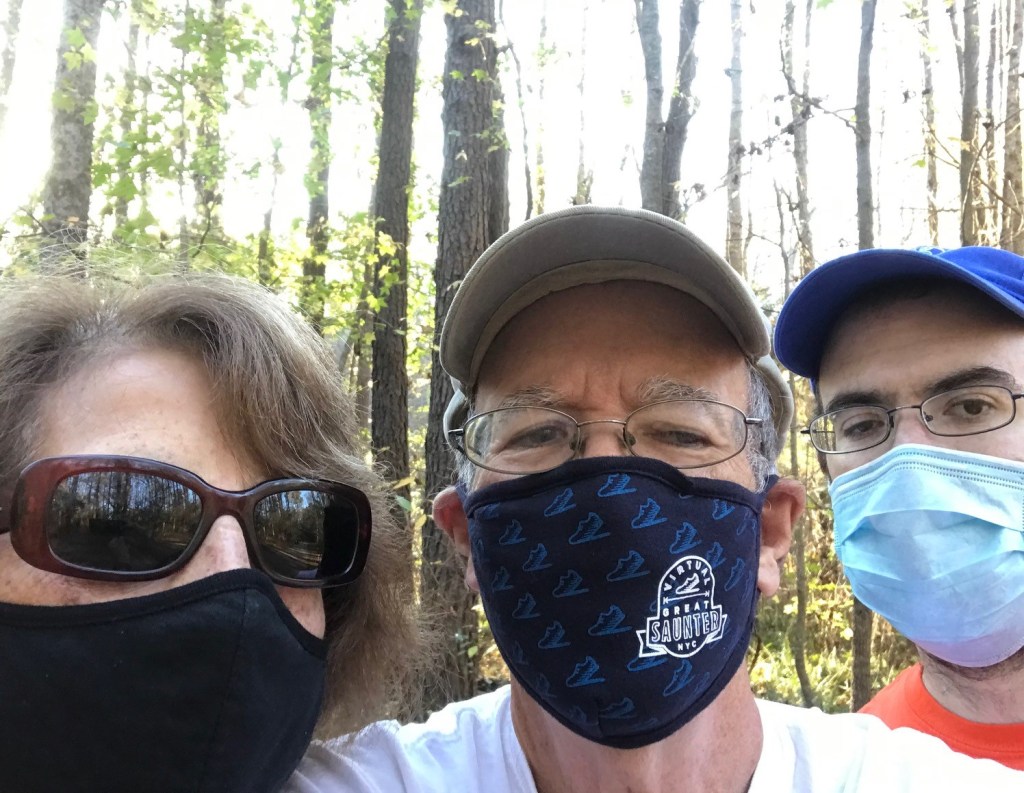
If your donation to a kidney patient was put on hold because of the pandemic, don’t hesitate to contact the transplant coordinator for an update. Also, periodically be sure to check this link for current COVID-related information about living donation and upcoming transplant evaluations. And, oh yeah, wear the damn mask! My husband, son, and I proudly did on the recent kidney walk in North Carolina.

Photo by rawpixel.com on Pexels.com

And happy Thanksgiving! Even though the holiday may look and feel different this year, most of us have something to be thankful for. For starters, I’m thankful for my excellent health 14 years after donating my kidney.

Coronavirus, Kidney Patients, and Everyone Else

If you’re reading this, chances are you’re considering donating a kidney or have already done so–but you also very likely know and care very much about someone who has chronic kidney disease (in my case my son, Paul, and my friend/co-author, Betsy, for starters). Or maybe you have it yourself.

With kidney patients at a high risk of contracting COVID-19–whether they are transplant recipients, are undergoing dialysis, or contemplating treatment–this is a particularly important issue for all of us and others in the kidney community. I hope that you will share the resources below with your friends and family so that they can remain safe and healthy. These materials are provided by the National Kidney Foundation (NKF) and offer advice on keeping healthy during this horrific pandemic. These links will be updated as needed.

Photo by rawpixel.com on Pexels.com

The latest information and best practices to be prepared for COVID-19: https://www.kidney.org/…/be-prepared-kidney-patient-prep-co…
Information to help kidney patients and their families respond to emergency situations: https://www.kidney.org/help

And a blog post from NKF’s CEO Kevin Longino on Covid-19 and the kidney community: https://nkfadvocacy.blog/…/supporting-you-during-the-coron…/

Whatever your own health status, and wherever you live, please stay safe and closely follow recommendations and requirements in your area. Also, here’s clear, valuable information on the virus from someone who knows more than anyone on the subject, Dr. Anthony Fauci, interviewed by Trevor Noah. https://youtu.be/8A3jiM2FNR8