Action Needed–Living Donor Protection Act Advances

Oh boy, is this painful! It may be the slowest sausage ever made.

The Living Donor Protection Act, which would simply protect discrimination against living organ donors by insurance companies and in employment, has been introduced in every session of Congress since 2014. It’s bipartisan, noncontroversial, and doesn’t cost taxpayers anything. It’s been on our list of “asks” in virtually all of my Capitol Hill advocacy meetings since 2020.
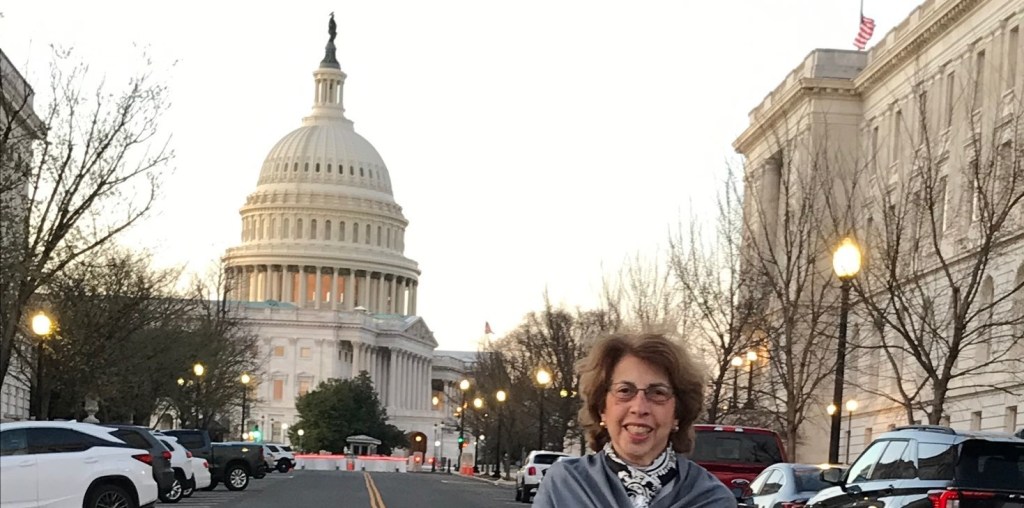
We finally have a critical breakthrough, but we need everyone’s help.

After getting oh-so-close to a committee hearing in the last session of Congress, the LDPA had to be reintroduced in this session (S. 1552) and then wait for a committee hearing. It’s now scheduled for “markup” with the Health, Education Labor and Pensions Committee Executive Session for Thursday, February 26th.

A “markup” mans that the committee will officially consider, possibly amend–basically hash out the details (we all know that’s where the devil lies)–and vote whether to move it on to the full Senate for a vote.

If your senator is among the following committee members, please contact him or her today and urge them to advance this important legislation during the executive session.

Republicans: Bill Cassidy (Chair), Rand Paul, Susan Collins, Lisa Murkowski, Markwayne Mullin, Roger Marshall, Tommy Tuberville, Tim Scott, Josh Hawley, Jim Banks, Mike Crapo, Marsha Blackburn.

Democrats: Bernie Sanders (Ranking Member), Patty Murray, Tammy Baldwin, Chris Murphy, Tim Kaine, Maggie Hassan, John Hickenlooper, Edward Markey, Andy Kim, Lisa Blunt Rochester, Angela Alsobrooks.

Here’s a sample email that you can revise as needed.

Dear [Senator’s name],

As your constituent and a living organ donor [or a family member/friend of a donor or of a potential recipient], I urge you to support the Living Donor Protection Act, S.1552, during the HELP Committee’s February 26 Executive Session. This critical legislation safeguards the rights of living donors by ensuring they are not discriminated against in terms of life, disability, and long-term care insurance. It also clarifies that FMLA rights apply to living donations.

Living donors save lives and reduce healthcare costs. However, without federal protections, donors face insurance and job security challenges after donation. This bill offers the protections current donors need, and it removes potential barriers for future donors.

Please take action now to pass the Living Donor Protection Act.

Thank you!

Sincerely,[Your name]

For related posts and information on my book, The Insider’s Guide to Living Kidney Donation, be sure to explore the rest of my website and my articles at Medium.com/@caroloffen.

An Important New Book: “Understanding Living Kidney Donation”

As a living kidney donor to my son, I can certainly attest to how rewarding, gratifying, meaningful and life changing the experience usually is. It’s also really complicated.

It would be complicated under the best of circumstances because, as we make clear in The Insider’s Guide to Living Kidney Donation, being a kidney donor is not just a medical decision. It has emotional, social, familial and financial ramifications. That’s why, in addition to information and resources, we included first-person accounts of people with different perspectives on the process.

The innate complexity of the experience is of course further complicated by the medical complexities of donor-recipient matching and the daunting intricacies of this country’s organ allocation system.

Perhaps, like me, you have a loved one who needs a kidney, or you know someone who’s donated and you know how much it meant to them, whether they gave to a family member or to a stranger. So you’re seriously considering taking this important step yourself.

Learn everything you can about it.

So–assuming you’ve already read our book!–go immediately to Glenna Frey’s excellent, extremely thorough new book. In clear, nontechnical language, she succinctly explains kidney donation, kidney disease and treatments and lays out all the stages in the donation process in detail, helpfully summarizing everything at the end of each chapter.

Glenna is a living donor herself and a well-known donation advocate. She co-founded Kidney Donor Conversations with daughter Amanda to educate people about kidneys and donation. Like my friend and co-author, Betsy, Glenna’s family has been touched by Polycystic Kidney Disease (PKD). Her husband is doing well on his second kidney transplant, and Amanda also has been diagnosed with the hereditary disease.

Glenna’s interest and expertise in the subject stems also from being a nephrology nurse for forty years, both in a transplant unit and in dialysis clinics. Given her dual personal and professional perspective, the accuracy and thoroughness of the information was not surprising. But I suspect that the refreshing clarity and accessibility of the text may also owe something to the influence of Amanda, whose career as a therapist has made her adept at making advanced concepts more accessible to lay readers.

Kidney donors need to be prepared with as much information as possible. This book belongs in any prospective donor’s library.

For related posts and information on my book, The Insider’s Guide to Living Kidney Donation, be sure to explore the rest of my website and my articles at Medium.com/@caroloffen.

“Ms. Smith” Goes Back to Washington

Last year at this time I excitedly announced here that I’d be going to Capitol Hill–in person!–for legislative meetings as part of the National Kidney Foundation’s Kidney Patient Summit. Because of the pandemic, the previous several summits had been virtual–important, productive, yes, but no substitute for the real thing.

I surprised myself by writing that though the logistics of getting from point A to point B, and so on, made me nervous, I realized that the actual meetings didn’t phase me. I explained that multiple trainings and meetings had driven home the message that personal stories of kidney donation and transplant are what make the biggest impression on legislators and their staff.

Last year’s team: Necole & Dre Roundtree, me, Alan Levy.

I’ve been telling mine (about donating my kidney to my adult son) for years to anyone who’ll listen.

This year I’m happy to say I’ll be going back to Capitol Hill for another in-person summit. This time I’ve been invited to also participate in a separate smaller group of advocates for a “series of deep-dive policy discussions” before the summit begins. I’m very excited to be honored with a seat at the table to consider critical issues, such as the status of the nationwide allocation system for deceased-donor organs in the wake of recent reform legislation, obstacles in furthering legislation to improve access to home dialysis, and the increased attention to addressing rare kidney diseases.

Stay tuned for more information.

For related posts and information on my book, The Insider’s Guide to Living Kidney Donation, be sure to explore the rest of my website

More New Year’s Resolutions

Every year before I make new new year’s resolutions, I try to look back to see how I did on last year’s. Alas, they’re almost always still relevant. I don’t think I’m unusual in that respect. I know that starting next week, for example, my Zumba classes and the workout area of my gym are going to be jammed. I used to be concerned but soon saw that in a matter of weeks, the crowds invariably start to thin, and by late February they’re always back to near-usual levels.

So, I thought I’d dust off my old new year’s resolution blog post and share these again. They’re relevant for everyone–if you’re a donor or never plan to be one.

Whether you’re being evaluated as a living donor already, or just thinking about it, here are a few suggestions that will benefit you and your kidneys–wherever they happen to be.

1- Take good care of yourself (and your kidneys).

–Exercise regularly.

–Get plenty of rest.

–Stay hydrated.

–Eat a healthy diet.

2-For your safety and your future recipient’s, be sure to get the latest Covid booster as soon as you’re eligible. Transplant recipients and anyone else who is immunocompromised, such as people with cancer or autoimmune diseases, can’t count on full protection from the vaccines. It’s all the more important that the rest of us add that protection.

3-Avoid ibuprofen and other NSAIDs—they’re hard on the kidneys for anyone—particularly important if you’re a donor or recipient.

4-Learn about kidney function. Kidneys are amazing!

5-Read up on all facets of kidney donation—for example, order a copy of The Insider’s Guide to Living Kidney Donation.

To all of you and your loved ones: a happy and healthy new year!

For related posts and information on my book, The Insider’s Guide to Living Kidney Donation, be sure to explore the rest of my website.