“Ms. Smith” Goes Back to Washington

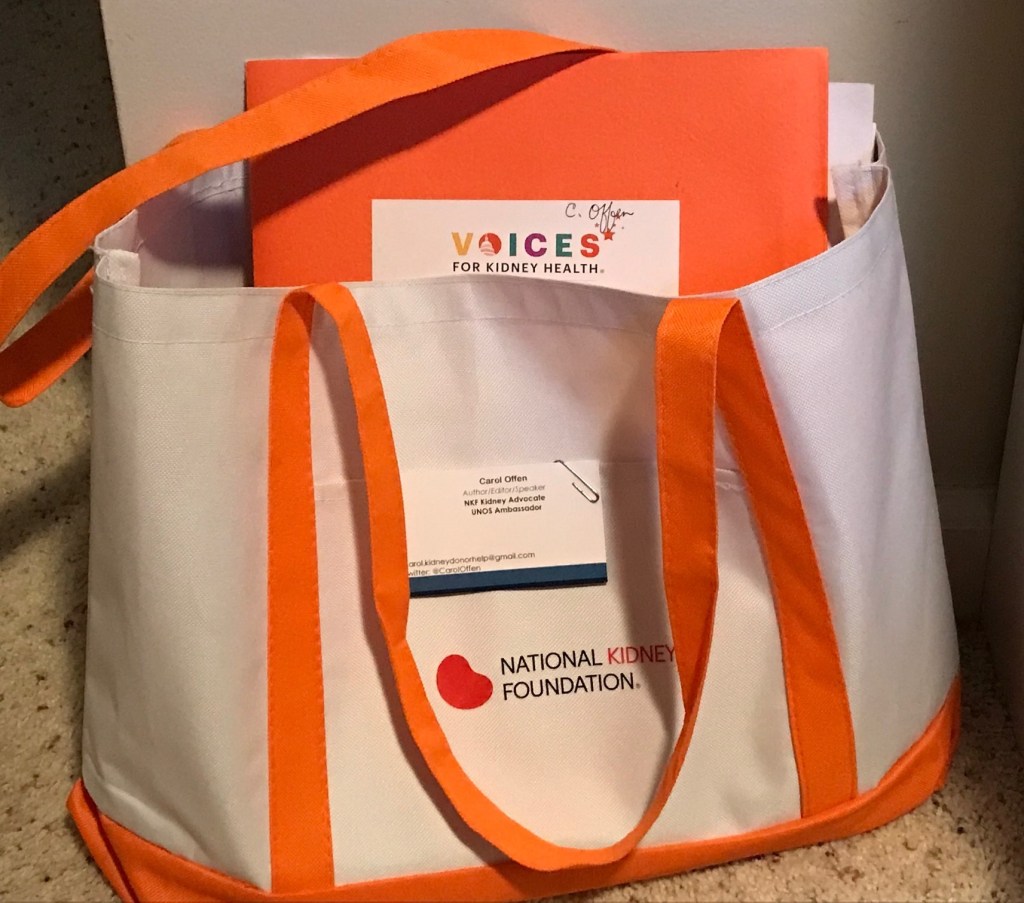
Last year at this time I excitedly announced here that I’d be going to Capitol Hill–in person!–for legislative meetings as part of the National Kidney Foundation’s Kidney Patient Summit. Because of the pandemic, the previous several summits had been virtual–important, productive, yes, but no substitute for the real thing.

I surprised myself by writing that though the logistics of getting from point A to point B, and so on, made me nervous, I realized that the actual meetings didn’t phase me. I explained that multiple trainings and meetings had driven home the message that personal stories of kidney donation and transplant are what make the biggest impression on legislators and their staff.

Last year’s team: Necole & Dre Roundtree, me, Alan Levy.

I’ve been telling mine (about donating my kidney to my adult son) for years to anyone who’ll listen.

This year I’m happy to say I’ll be going back to Capitol Hill for another in-person summit. This time I’ve been invited to also participate in a separate smaller group of advocates for a “series of deep-dive policy discussions” before the summit begins. I’m very excited to be honored with a seat at the table to consider critical issues, such as the status of the nationwide allocation system for deceased-donor organs in the wake of recent reform legislation, obstacles in furthering legislation to improve access to home dialysis, and the increased attention to addressing rare kidney diseases.

Stay tuned for more information.

For related posts and information on my book, The Insider’s Guide to Living Kidney Donation, be sure to explore the rest of my website

More New Year’s Resolutions

Every year before I make new new year’s resolutions, I try to look back to see how I did on last year’s. Alas, they’re almost always still relevant. I don’t think I’m unusual in that respect. I know that starting next week, for example, my Zumba classes and the workout area of my gym are going to be jammed. I used to be concerned but soon saw that in a matter of weeks, the crowds invariably start to thin, and by late February they’re always back to near-usual levels.

So, I thought I’d dust off my old new year’s resolution blog post and share these again. They’re relevant for everyone–if you’re a donor or never plan to be one.

Whether you’re being evaluated as a living donor already, or just thinking about it, here are a few suggestions that will benefit you and your kidneys–wherever they happen to be.

1- Take good care of yourself (and your kidneys).

–Exercise regularly.

–Get plenty of rest.

–Stay hydrated.

–Eat a healthy diet.

2-For your safety and your future recipient’s, be sure to get the latest Covid booster as soon as you’re eligible. Transplant recipients and anyone else who is immunocompromised, such as people with cancer or autoimmune diseases, can’t count on full protection from the vaccines. It’s all the more important that the rest of us add that protection.

3-Avoid ibuprofen and other NSAIDs—they’re hard on the kidneys for anyone—particularly important if you’re a donor or recipient.

4-Learn about kidney function. Kidneys are amazing!

5-Read up on all facets of kidney donation—for example, order a copy of The Insider’s Guide to Living Kidney Donation.

To all of you and your loved ones: a happy and healthy new year!

For related posts and information on my book, The Insider’s Guide to Living Kidney Donation, be sure to explore the rest of my website.

Gifting Books about the Greatest Gift?

My tastes in reading have always been pretty varied. I was never much of a history buff, but I discovered a back door through well-written, riveting memoirs and biographies. Similarly, though I don’t have a science background, I’ve learned so much about organ donation and transplantation through authors’ personal and professional experiences. In recent years I’ve enjoyed reading a wide range of social sciences, which have reminded me how much I enjoyed my college psych, philosophy, and sociology courses.

So I thought I’d share here some of my favorite donation-related book titles, in case you’re looking for a holiday gift for someone who has either a personal or professional interest in organ donation–or just a curious mind about a very serious and fascinating public health crisis. To me, these are classics (yes, of course, I’ve included my book) that belong on everybody’s bookshelf (listed alphabetically):

Because of Organ Donation: A Collection of Inspiring Stories Celebrating the Gift of Life–Brenda E. Cortez This poignant anthology looks at organ donation from diverse perspectives: living donors, families of deceased donors, and recipients. I wrote about it in an earlier blog post; the author has since published more donation-related anthologies (learn about her children’s books here).

The Fear Factor: How One Emotion Connects Altruists, Psychopaths, and Everyone In-Between–Abigail Marsh Marsh is a psychologist/neuroscientist with a special interest in altruism. She has done brain studies of nondirected donors and psychopaths. Her very accessible explanations, relatable anecdotes, and fine writing combine to make this a fascinating and memorable read.

The Insider’s Guide to Living Kidney Donation: Everything You Need to Know If You Give (or Get) the Greatest GiftCarol Offen and Elizabeth Crais. Read what reviewers and readers have to say.

Kidney to ShareMartha Gershun and John D. Lantos. In alternating chapters with Dr. Lantos, a physician and a bioethicist, Gershun vividly and insightfully describes her personal experience of donating. She candidly shares both her gratification as a donor and her frustration in contending with the unimaginable obstacles on her path. Both authors raise thought-provoking points on how the system could and should work better.

When Death Becomes Life: Notes from a Transplant Surgeon-Joshua D. Mezrich. Dr. Mezrich takes us inside the entire process of transplantation. He movingly describes talking with the families of deceased donors before ever going into the OR. He writes sensitively and evocatively of his experiences with patients and colleagues–for me, the highlight of the book. The first half, on the history of transplantation and the medical breakthroughs, is fascinating reading, though the medical details can be heavy lifting for some readers.

For related posts and information on my book, The Insider’s Guide to Living Kidney Donation, be sure to explore the rest of my website.

HOLD Act = Aid for More Would-be Donors

If you’ve read any of my blog posts about financial assistance for living donors, you know that one of my pet peeves (boy, is that a euphemism!) is the practice of making aid for donors dependent on their recipient‘s income, as has been the policy through the federal National Living Donor Assistance Center (NLDAC).

So I was delighted to see a bipartisan piece of legislation introduced in Congress last month that would shift the emphasis and could directly lead to more people becoming living organ donors. The Honor Our Living Donors (HOLD) Act (H.R. 6020) would help more donors qualify for reimbursement from NLDAC for lost wages and travel and caregiving expenses–based on the donor’s own financial status. (Fortunately, there are currently other options–see my Resources section–but a federal assistance program needs to be available to everyone.)

Photo by rawpixel.com on Pexels.com

As the mother of my recipient, I know both sides of this very special relationship. We were fortunate that I was able to donate to my son. If that had not been possible, I can’t imagine the extra emotional and financial strain that trying to help a donor would have put on our family. The obvious potential for tension and discomfort (for both parties) inherent in this perverse system is not only unfair but also counterproductive. Thousands of lives are lost each year because so many patients’ potential donors decline to donate because of these obstacles.

If you want to help living donors–and thereby kidney patients–please contact your member of Congress now to help build support for this urgently needed bill (HR 6020). And if your representative happens to be either Rep. Jay Obernolte (R-Calif), who introduced the bill, or Rep. Suzan DelBene (D-WA), who cosponsored it–be sure to thank them.

For related posts and information on my book, The Insider’s Guide to Living Kidney Donation, be sure to explore the rest of my website.

Seeking Input on Kidney Website Content

It’s been more than four years since I launched this kidney donation website. It’s expanded, the numbers of visits and hits have surpassed my wildest dreams—but it still looks the same. Someday I’d really like to give it a fresh look. I’ve learned a lot over the past few years and would love to make it more attractive and functional.

But you know what, I feel the same way about our backyard, and, despite my best intentions, it still hasn’t happened.

The website won’t take quite as much work—or, fortunately, money—but I know it’s not going to happen anytime soon. In the meantime, though, I thought I’d look at the content and consider small changes I could make to various elements.

So, I’m going to start with the Resources page and the FAQs. I’d very much appreciate it if you would take a look at both and see if you think I’ve missed something important that would benefit would-be living donors or others visiting the site. Or, for that matter, if you think I should consider replacing any of the FAQs or organizations on the resources list.

Please send me your suggestions! (And if you have any tips on low-maintenance, inexpensive things I can do for our backyard…)

Many thanks!

For related posts and information on my book, The Insider’s Guide to Living Kidney Donation, be sure to explore the rest of my website.

Paired Donation Options: Guest Blogger, Martha Gershun

I am very pleased to share this space with a fellow living donor/donation advocate (BTW, her excellent book, Kidney to Share, belongs on your bookshelf right next to The Insider’s Guide to Living Kidney Donation).

Beyond direct donation: what if your friends and family don’t match?

September 28, 2023

By Martha Gershun, Guest Blogger 

As a living kidney donor, I often hear from people who have recently been diagnosed with End Stage Renal Disease (ESRD) or have a relative who is a kidney patient.  These patients have usually been given little information about the advantages of living kidney donation and almost no guidance on how to maximize their chances of finding a donor.  Many providers, who are highly experienced in the medical and surgical aspects of the procedure, have limited resources to help patients implement a successful donor search.  Not surprisingly, they do not tell patients that other transplant centers may have a model that offers a better chance of finding them a kidney.

Family and friends often want to help, but finding a match can be hard. Even close biological relatives, such as siblings, may not match.  The odds of a potential donor matching with a non-biological relative or friend can range from 1 in 100 to 1 in 100,000, depending on the patient’s blood type and other immunological markers. Upwards of one-third of willing donors are not compatible matches for their intended recipients.

There are several ways these generous people can still donate to benefit their designated kidney patient.

Many transplant clinics manage their own databases to form kidney pairs or chains, putting together a prospective donor/recipient pair with another donor/recipient pair (or multiple pairs in the case of kidney chains) to form matches.  These heroic efforts can result in several transplants over a very short period of time.  However,  they rely on the hospital to find these matches within their own patient population.

There are also national nonprofits that work to find matches across hospital systems for pair or chain exchanges, significantly expanding the set of possible donors.  The largest of these organizations, the National Kidney Registry (NKR) lists thousands of potential donors. If a kidney patient has a willing donor who is not a match, that person can donate through the National Kidney Registry to generate a voucher, which allows the patient they intend to benefit to receive a matching kidney from someone else on the Registry.  Often these vouchers are “redeemable” within weeks or months, allowing the intended kidney patient to receive a new kidney very quickly.

The National Kidney Registry also has a program called Donor Shield, which provides a multitude of benefits to the donor, including reimbursement for travel, lodging, and dependent care; reimbursement for lost wages; the possible opportunity to donate at a hospital closer to home; home blood draws; and significant support beginning with the medical and psychological evaluation for all prospective donors and extending past the surgery.

Participating in the National Kidney Registry requires the patient to be listed at one of the 102 Transplant Clinics that are paying members of the National Kidney Registry.

The Alliance for Paired Kidney Donation (APKD) does similar work, facilitating paired or chain exchanges through its network of transplant clinics in 24 states. Donors who donate as part of an APKD kidney exchange are eligible for a robust package of support and protections that include wage reimbursement; travel expense reimbursement; and donor and companion life, disability, and complication insurance.  Non-directed donors also receive APKD’s KidneyPledge, which comes in several forms, including an Advanced Donor Pledge, which will provide the opportunity to participate in an APKD kidney exchange for one named individual with known kidney disease, for the life of the named individual.

The benefits to this process are so significant – for the patient, who will likely find a living donor much faster, and for their donor, who will have the benefits of NKR’s Donor Shield or APKD’s KidneyPledge, that I encourage kidney patients to seek out a transplant clinic that is affiliated with one of these nonprofits, even if they are already listed elsewhere or have to travel to do so.

Finding a living donor can be difficult, but staying creative, flexible, and persistent can make it easier.


Martha Gershun is a nonprofit consultant and writer living in Fairway, KS with her husband Don Goldman. Her most recent book, Kidney to Share (Cornell University Press, 2021), with co-author John Lantos, MD, details her experience donating a kidney at the Mayo Clinic to a woman she read about in the newspaper. Gershun serves on the Expert Advisory Panel for the Kidney Transplant Collaborative and serves on the Board of the National Kidney Foundation Serving Kansas, Oklahoma, and Western Missouri.

Myths about Living Donors Do a Disservice to Everyone

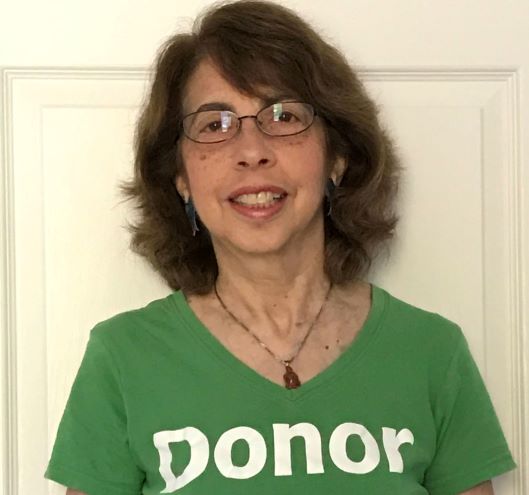
Anyone who’s even casually perused this website or read many of my posts knows that I’m not brave and I’m not a risk taker–nor am I remotely athletic or even especially selfless. A lot of people think that living donors are many if not all of those things.

One of the reasons I launched this website, in fact, was because I realized that my story of donating to my son is more relatable than most: we had no family history of chronic kidney disease and no risk factors. And surely there was nothing on my part that would have suggested a propensity for becoming a living donor. When I tell my story to lawmakers or legislative staffers, I often conclude by saying sincerely “what happened to my family can happen to any family.”

So, in addition to writing about it here–and of course, in our book, The Insider’s Guide to Living Kidney Donation–sometimes I write about living donation on Medium (I write about other things too!). That is, I’m looking for an audience that might not have a connection to kidney disease, donation, or transplant. I want to remove the veil and help people see that most living kidney donors are average people. Please check out my latest article.

Photo by Jamie Street on Unsplash

For related posts and information on my book, The Insider’s Guide to Living Kidney Donation, be sure to explore the rest of my website.

Living Donors Don’t Get Paid (Yet) But the Rewards Are Still Real

Maybe you’ve heard that there’s a growing movement to find a way to fairly compensate living donors as a way to address the dire kidney shortage. It’s in the form of the Coalition to Modify NOTA (the National Organ Transplant Act). Simply put, NOTA is the reason that though we can pay people to donate blood or sperm or even to carry our baby, we can’t do the same for living donors. I’ll be writing more about this in the coming weeks.

Photo by Pixabay on Pexels.com

But in the meantime, most people who have donated their kidney will tell you that the nonmonetary rewards of donation are undeniable (which by no means makes compensation any less justified). I update and dust off the blog post below every year or so because it really bears repeating.

Living donors have told me they’d nodded in agreement while reading it, and many people point out that even though these things are pretty obvious to donors, transplant centers usually don’t give them sufficient weight.

**********************************************

In previous posts, I’ve described some of the enormous benefits of a live vs. deceased-donor kidney transplant for the recipient, but did you know that there are many very real benefits to the living donor, too? For family members or couples, the benefits are nothing short of dramatic. And I’m not just talking about feel-good points.

For a family, the practical benefits can be as concrete as money in the bank. A spouse or parent whose ability to work was limited by dialysis for a long period may gradually be able to resume a full-time schedule–maybe even launch a new career. That can substantially improve the family’s ailing financial health as well.

For family caregivers, particularly, donating a kidney to the loved one you’ve been caring for can bring huge relief. The reduced stress and no doubt improved sleep can have considerable benefits in energy, mood, overall outlook, and, as a result, even job satisfaction.

Then there’s the extraordinary motivation of saving a loved one’s life or turning it around. A living donor I know who’d donated to her husband described her decision as “purely selfish. I wasn’t about to lose him,” she insisted. I know the feeling.

Seeing someone you love–in my case, my adult son–who’d been pale, weak, and listless for months or years gradually become their old self again is pretty powerful. And a donor whose partner wasn’t interested in intimacy during a long period of ill health may see a positive change in their relationship.

Want to improve your social life? Give your partner a kidney! Couples who have been uncomfortable for a long time about socializing—whether because of physical obstacles or simply due to the dialysis patient’s lack of energy or interest—may soon be able to enjoy evenings out with friends or family.

For anyone who donates a kidney—even to someone they don’t know—the benefits are nearly universal:

The feeling of personal gratification is indescribable. Knowing that you’ve helped give someone—anyone—a shot at a healthy, productive life—is an extraordinary feeling. Living donors in studies report a boost in self-esteem, and 9 out of 10 say they would do it again. Through donor-support groups I’m active in on Facebook, I’ve been struck by how life changing the experience has felt for most of us, including the few who have later had complications or whose recipient didn’t fare well for as long as expected.

A fascinating journal article inspired this post. The researchers argue that for the above reasons and more, transplant centers considering a potential donor’s relative risk might do well to acknowledge and give weight to the undeniable tangible benefits for certain donors.

“Van Pilsum Rasmussen, S. E., M. Henderson, J. Kahn, and D. Segev. “Considering Tangible Benefit for Interdependent Donors: Extending a Risk–Benefit Framework in Donor Selection.” American Journal of Transplantation 17, no. 10 (Oct. 2017): 2567-2571.

For related posts and information on my book, The Insider’s Guide to Living Kidney Donation, be sure to explore the rest of my website.

Minority Donor Awareness Month

Like most “awareness months,” this one should get more attention year ’round. Because minorities are disproportionately affected by chronic kidney disease, they are also disproportionately underrepresented when it comes to organ donation. National Minority Donor Awareness Month is a collaborative initiative of the National (Organ, Eye and Tissue Donation) Multicultural Action Group (NMAG) designed to change that.

NMAG’s objective is to bring heightened awareness to donation and transplantation in multicultural communities; the focus is on African American, Hispanic, Asian/Pacific Islander. and Native American communities.

Black or African Americans are more than 3 times as likely, and Hispanics or Latinos 1.3 times as likely, to develop kidney failure compared with white Americans, according to the National Kidney Foundation website. That’s primarily because these minorities have much higher rates of the conditions that are the major risk factors for chronic kidney disease, namely diabetes, high blood pressure, and obesity.

Earlier this year I wrote here that action finally was being taken to address critical systemic inequities in access to transplant. The formula that determines a patient’s degree of kidney function (eGFR)–and consequently their eligibility for transplant–was race based for decades until last year. The result was that fewer African Americans were deemed to be “needing” a transplant even when their creatinine (level of waste products in the blood) was the same as a white patient’s. U.S. transplant centers are now required to adjust the status of African American kidney patients who were wrongly classified based on the old formula.

That was huge news. Overall, most of the nearly 100,000 people waiting for a deceased-donor kidney in the United States wait five to ten years. Thousands die each year simply because they didn’t get one in time. Anything that unnecessarily adds to that wait is tragic.

Remember what I said in the opening about needing more minority donors? Example: In 2021 nearly 30% (28.6) of the total candidates waiting for transplants in this country were non-Hispanic blacks, but black individuals made up just 15% of organ donors in 2021.

Unfortunately, rates for living donation are even more affected. In 2021 only 18.7% of black donors were living donors versus 33.6% of white donors. Given that living donation offers shorter waits and provides better outcomes, lagging in this area further compounds the appalling disadvantages.

Taking concrete steps to reduce inequities in the system is one important way to shorten the wait for a lifesaving organ for those most in need. Raising awareness of the situation–among individuals, healthcare providers, and members of Congress (to provide increased funding for research and supports)–are others.

The NMAG collaborative has numerous print and social media messages on donation and transplantation. Spreading these messages is important this month and every month.

For related posts, resources, and information on The Insider’s Guide to Living Kidney Donation, be sure to explore the rest of my website.

My Favorite Activist: Maggie Kuhn

Today (August 3) is the birth date of someone you may not have heard of but who deserves to be remembered and honored: Maggie Kuhn, the engaging founder of the Gray Panthers. Maybe you saw my recent recollection on Medium of my interview with her in the 1970s or recall my blog post here You’re Never Too Old to Be an Activist.

Full disclosure: Maggie Kuhn had nothing to do with kidney donation or protections for living donors–not directly, anyway. But she was a role model for me and should be for anyone who’s ever hesitated to step outside their comfort zone to advocate for something they believe in.

“Speak your mind,” she famously said, “even if your voice shakes.” After having to take mandatory retirement at age 65, Maggie spoke hers at rallies, before boards, and congressional committees as she fought for rights of older Americans and protections for the most vulnerable in society.

I hope you’ll check out the links in this post to learn a bit about Maggie Kuhn and be inspired by her, as I was.

For related posts, resources, and information on The Insider’s Guide to Living Kidney Donation, be sure to explore the rest of my website.