Holiday Gifts about the Greatest Gift

If you’re still looking for ideas for a holiday–or any kind of–gift, consider a batch of my personal favorites on my favorite subject. A couple of years ago,I described several here, and they’re still books I regularly recommend. I also have a few to add:

Ascending America, by Matt Harmody, just came out in November. Before I read this beautiful book about living-donor mountain climbers and world records, I didn’t know a thing about mountain climbing and had no particular interest in it. But as a living kidney donor/advocate, I, of course had to check it out. I’m very glad I did.

I wrote about the author here a while back when I did a post about living kidney donors climbing Mt. Kilimanjaro in 2022. This time Matt was part of a team of living donors who broke a Guinness world record by climbing 50 state summits in 43 days! The riveting text explains just enough about the technical parts of climbing to grasp the exciting situations but not enough to bore the layperson.

And readers who are more interested in the climbing will also learn about kidney donation–as much or as little as they’d like, because the short, specific, and very accessible chapters are designed for easy reference. A retired emergency physician, Matt knows how to explain medical information to make it understandable to the rest of us. For readers who want to delve further, the chapters have extensive footnotes.

The donor team’s message is that even living donors who were ultra-athletes before donating needn’t fear that donating will necessarily alter their active lifestyle. My only caveat in writing about these amazing advocates is the need to continually remind readers that you don’t need to be a mountain climber-type to be a living donor. Living donors aren’t a breed apart–most of us are simply very healthy, caring individuals who were touched by someone’s need and were in a position to do something about it.

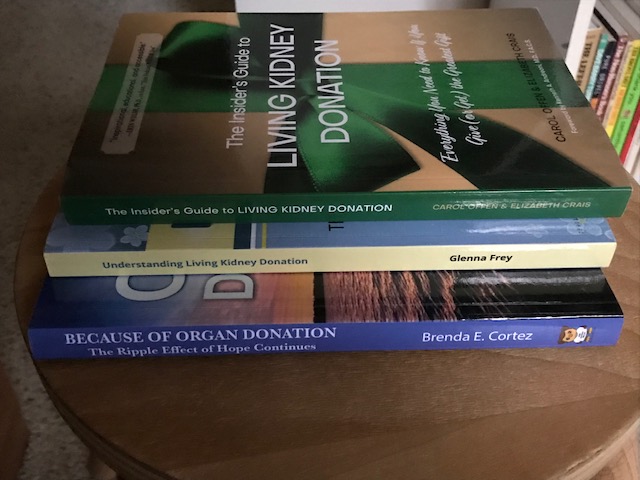
Because of Organ Donation: The Ripple Effect of Hope Continues, by Brenda E. Cortez. I’ve written about Brenda before, with her HOWL the Owl children’s series on donation and the first Because of Organ Donation.

The latest edition first came to my attention because of my interest in one of the contributors, Stormi Murtie. I wrote about Stormi’s tireless efforts to donate her kidney to her firefighter stepson in another state. His rare, life-threatening disease had drastically reduced his chances of finding a match. Her chapter evocatively details the anguish and frustrating delays they experienced, which were exacerbated by the terrible timing: the early phases of COVID.

Ultimately, Stormi’s stepson received a deceased donor transplant [which, sadly, failed after two years, so he is once again in need of a donor]. By then Stormi was determined to donate anyway and did it through a donor exchange program. The book’s companion chapter was written by her grateful recipient’s wife, who was also a living donor in an exchange. The families have become close.

The warm bond and resulting close relationships between donor and recipient families is a familiar theme in these stories and in those of so many donation advocates I’ve met.

One particularly memorable chapter is by a woman whose family lost their adult son in a tragic ski accident. She describes the remarkable and unexpected relationship that resulted when their son’s liver matched with a young man who lived nearby. When his wife gave birth to twins, they warmly accepted the older couple as their children’s adopted grandparents. The couple continues to be actively involved in the growing children’s lives, one of whom was named after the donor.

As in the first book, the contributors bring a wide variety of perspectives and write movingly about their donation/transplant experiences. I’m reminded that despite the similarities, no two donor-recipient stories are the same, and I always learn something from them. I’m also invariably inspired by people who have repeatedly experienced life-threatening episodes and choose to devote much time and energy to advocating for donation.

I previously reviewed here Understanding Living Kidney Donation, by Glenna Frey, a nephrology nurse who is also a living donor; it’s an excellent and comprehensive book on kidney disease and donation; and Gifted, by Robert Horsey, which, unlike the other books, is a poignant novel. It’s inspired by the author ‘s professional experience and commitment to donation as an organ procurement coordinator.

And if you’d like to gift my book, The Insider’s Guide to Living Kidney Donation, you can take advantage of the current 25% off on the paperback by using promo code HOLIDAY at checkout at this link.

NC Will “Soon” Have a Living Donor Protection Act!

It’s so close I can taste it.

I actually wrote much of this blog post in late June thinking it was days away, then put it aside thinking I’d wait till it was official that North Carolina would join the other 35 states that currently have living donor protections.

I decided not to wait because nearly three months later, it’s still not official–though it’s closer than it’s ever been.

NC Senate Bill 101 is currently in the Rules Committee of the State Senate just to approve the changes made to the bill by the House. It shouldn’t take long but…

We–donation advocates, donors and recipients alike–have been working to prohibit discrimination against living donors by insurance companies and to provide various job protections for several years. I personally have been in the fight since 2019.

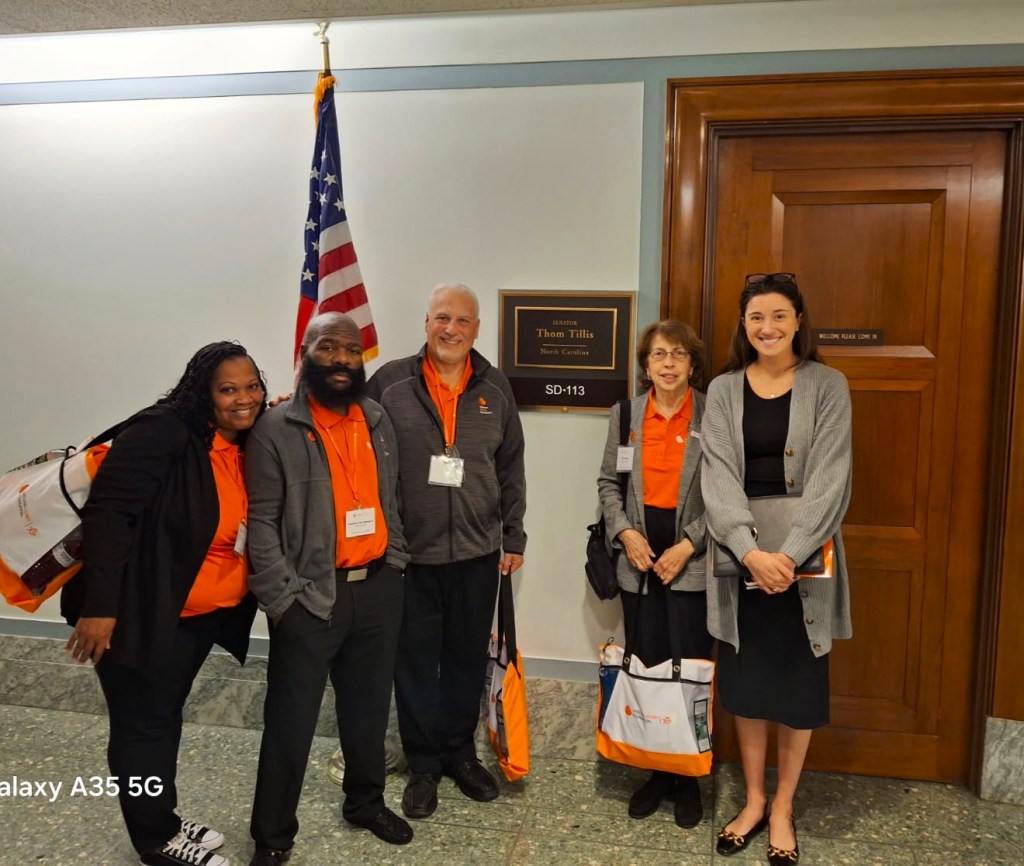
Nearly six years ago, I first met with a NC state legislator (Rep. Willingham, center of photo) and several aides for other lawmakers at the General Assembly; five years ago I had coffee in district with a state legislator; four yeas ago I gave public comment; three years ago I attended a legislative breakfast with a few state legislators to give them a personal perspective on living donation. Throughout, I’ve made countless phone calls and written several blog posts to demonstrate support.

Each legislative session, we thought this would be the one, we’d finally make it–only to miss out at the last minute and we’d need to start from scratch in the next legislative session. Last year it was because a feud between state legislators had led one of them to block the bill.

And then, in June, to my shock and delight, I learned in a meeting that the General Assembly had just passed the bill. I couldn’t find anything online about it as it went through its final formal paces.

Then about a month later I learned that it was headed to the governor’s desk, awaiting his signature.

It wasn’t.

There’s one more hurdle: the Rules Committee, which is where it’s been sitting since late June.

So this week, along with other advocates, I called the bill’s primary sponsors to urge them to try to persuade the Rules Committee to bring it to a vote.

If you’re in North Carolina, please contact your state senator and ask them to do the same. Note that this bill has been approved by both the House and the Senate.

For living donors in the state, I’m happy to report that the bill goes a little further than the national version that’s been hiccuping through Congress since 2014. The NC version gives public employees two weeks of paid leave to donate. In addition to protections for living donors, the bill protects tax-advantaged accounts such as college tuition programs and ABLE accounts for individuals with disabilities.

Here’s hoping that the next post I write on this topic will be a clear-cut triumphant one.

For related posts and information on my book, The Insider’s Guide to Living Kidney Donation, be sure to explore the rest of my website and my articles at Medium.com/@caroloffen.

An Important New Book: “Understanding Living Kidney Donation”

As a living kidney donor to my son, I can certainly attest to how rewarding, gratifying, meaningful and life changing the experience usually is. It’s also really complicated.

It would be complicated under the best of circumstances because, as we make clear in The Insider’s Guide to Living Kidney Donation, being a kidney donor is not just a medical decision. It has emotional, social, familial and financial ramifications. That’s why, in addition to information and resources, we included first-person accounts of people with different perspectives on the process.

The innate complexity of the experience is of course further complicated by the medical complexities of donor-recipient matching and the daunting intricacies of this country’s organ allocation system.

Perhaps, like me, you have a loved one who needs a kidney, or you know someone who’s donated and you know how much it meant to them, whether they gave to a family member or to a stranger. So you’re seriously considering taking this important step yourself.

Learn everything you can about it.

So–assuming you’ve already read our book!–go immediately to Glenna Frey’s excellent, extremely thorough new book. In clear, nontechnical language, she succinctly explains kidney donation, kidney disease and treatments and lays out all the stages in the donation process in detail, helpfully summarizing everything at the end of each chapter.

Glenna is a living donor herself and a well-known donation advocate. She co-founded Kidney Donor Conversations with daughter Amanda to educate people about kidneys and donation. Like my friend and co-author, Betsy, Glenna’s family has been touched by Polycystic Kidney Disease (PKD). Her husband is doing well on his second kidney transplant, and Amanda also has been diagnosed with the hereditary disease.

Glenna’s interest and expertise in the subject stems also from being a nephrology nurse for forty years, both in a transplant unit and in dialysis clinics. Given her dual personal and professional perspective, the accuracy and thoroughness of the information was not surprising. But I suspect that the refreshing clarity and accessibility of the text may also owe something to the influence of Amanda, whose career as a therapist has made her adept at making advanced concepts more accessible to lay readers.

Kidney donors need to be prepared with as much information as possible. This book belongs in any prospective donor’s library.

For related posts and information on my book, The Insider’s Guide to Living Kidney Donation, be sure to explore the rest of my website and my articles at Medium.com/@caroloffen.

A New Milestone for the Site–And Me!

A little more than six years ago, at the age of 71, I launched this website, knowing virtually nothing about launching a website. At the same time, I began writing a blog, knowing little more about writing blogs.

Photo by Tara Winstead on Pexels.com

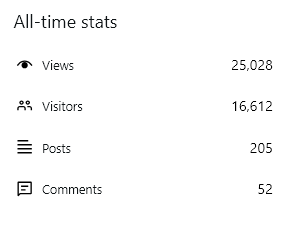
We just hit 25,000-plus hits! And 16,000 unique visitors!

Amazing.

The odds were that it would last just a few months–a year or two at most. That’s typically the fate of similar ventures. But here we are.

I’m proud to say that for several years, the site has consistently been in the top 5 of Best Kidney Donor Blogs. When I was posting regularly, it was actually at number 2 or 3, behind two large national organizations. Ever since I began writing more frequently on Medium.com–kidney-related posts as well as personal essays and memoirs–I’ve admittedly neglected this site.

That’s why these remarkable stats took me by surprise last week:

I often say I’ve been fortunate to be having a second act as a donation advocate. Raising awareness of kidney disease and donation has been my passion for more more than a decade.

But, believe me, launching a website … writing a blog … speaking before groups never was–and still isn’t. But in pursuit of my passion, I discovered that I needed to–and could– learn to do all sorts of things I previously thought impossible.

Am I good at any of them? Good enough at most and getting better all the time.

My advice is neither profound nor original, but here goes: whatever your passion, your dream, your goal–go for it! Even if it’s outside your comfort zone–especially if it’s outside your comfort zone. The bonus just may be a few more skills that you never thought you’d accomplish.

For related posts and information on my book, The Insider’s Guide to Living Kidney Donation, be sure to explore the rest of my website and my articles at Medium.com/@caroloffen.

Kidney Advocacy 101

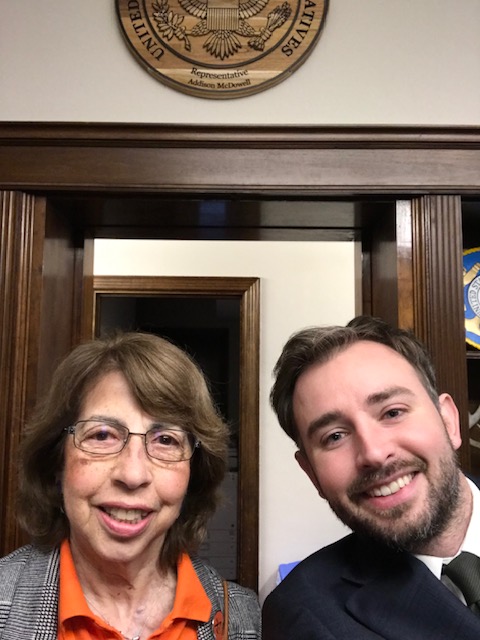
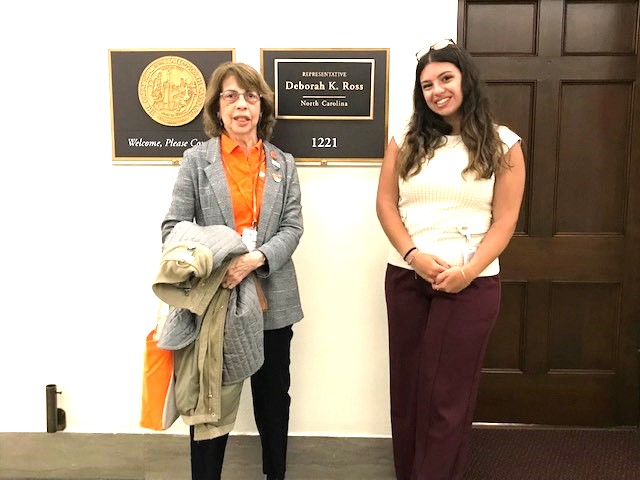
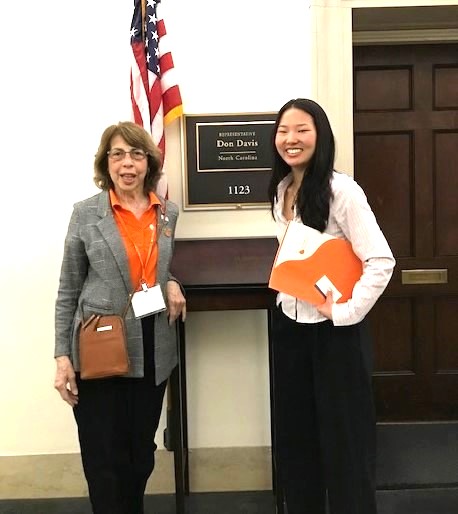
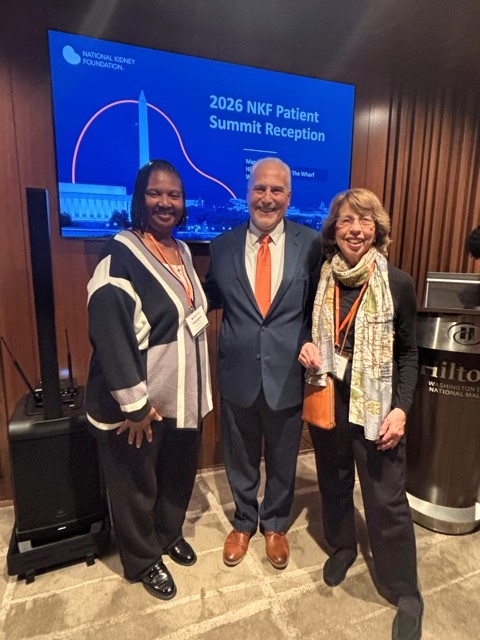
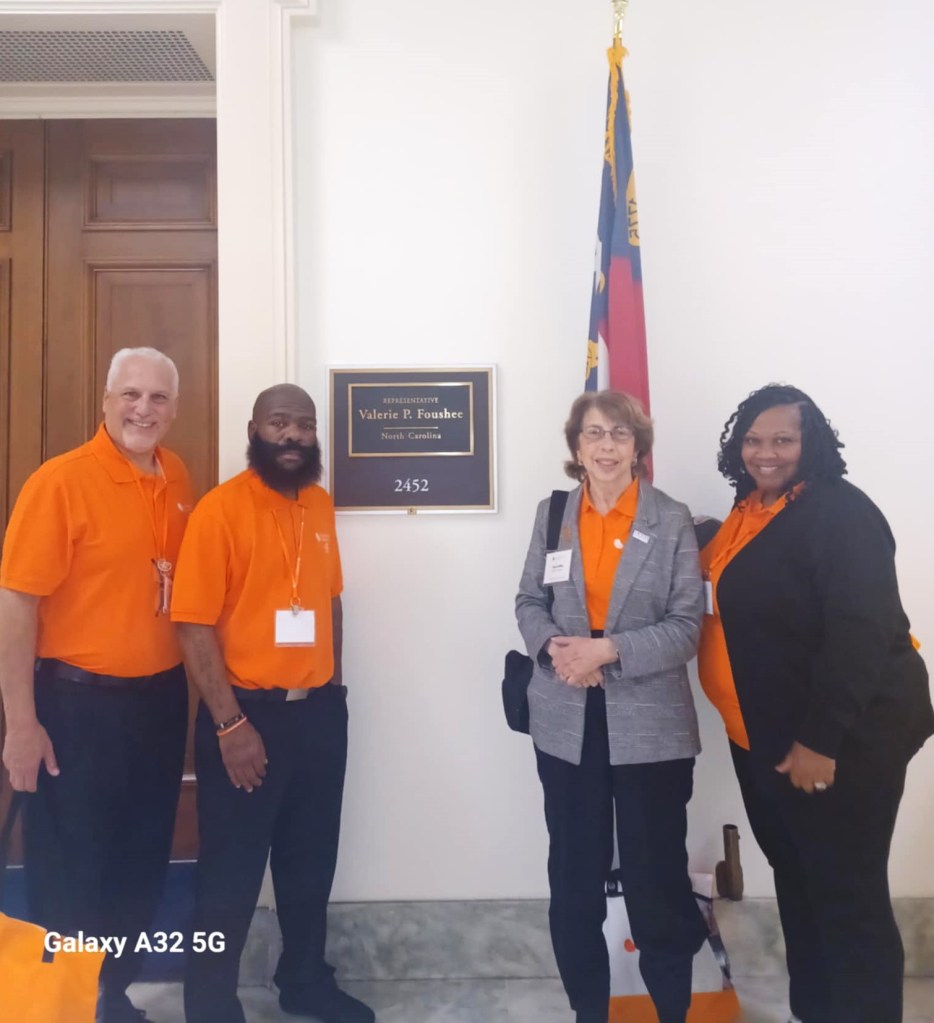
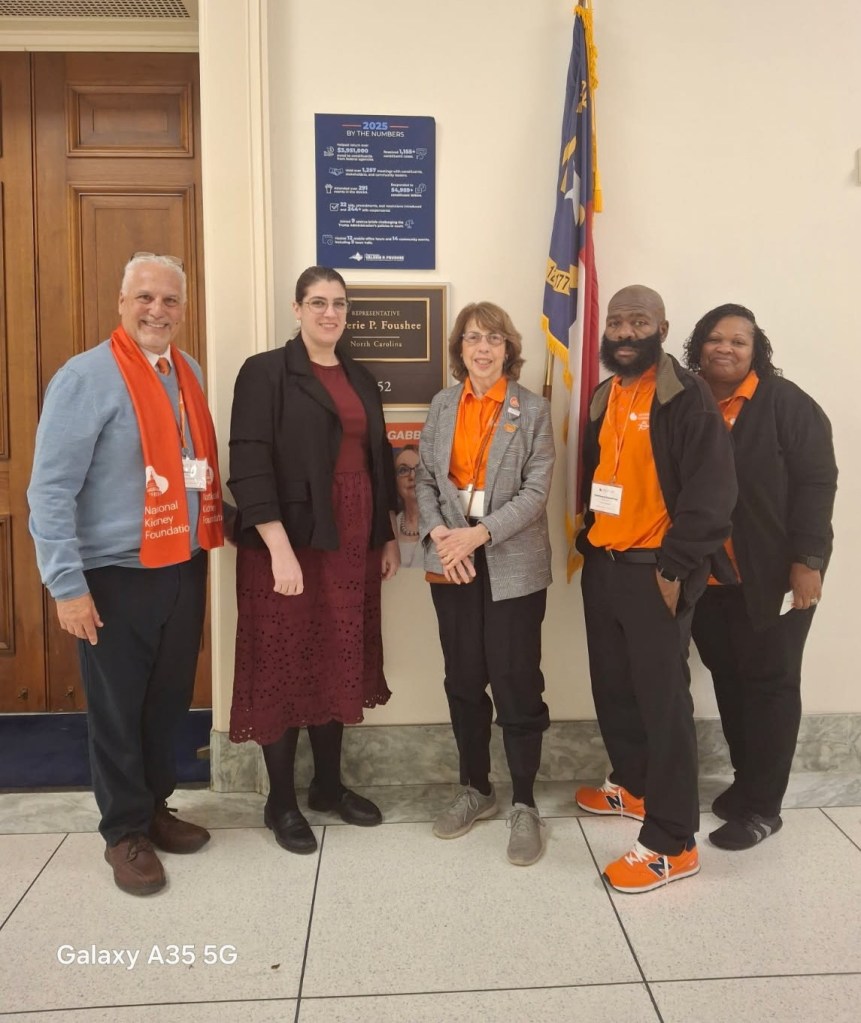
I just came back from Washington, DC, where I participated in in-person meetings on Capitol Hill–for the fourth time–to discuss ways that Congress can and must support the kidney community. As I type these words, I realize that the kidney community may sound like a small portion of Americans, a discrete segment of the population.

Unfortunately, that’s hardly the case.

Numbers typically don’t leave a lasting impression on most of us. Reading the oft-repeated statistic that 37 million people in this country, one in seven, are estimated to have chronic kidney disease starts to lose its shock value. Dramatic as that is, however, it’s usually followed by the shocking statement that 90% of them don’t know it.

It’s likely that you know someone who’s among the people in that estimate–maybe even a loved one.

Before my son was diagnosed with chronic kidney disease about 20 years ago, my family thought, like many, that kidney disease was something that just happened to other people. Not true, of course. And when people hear that my son’s condition was caused by a strep infection, they quickly realize that what happened to our family could happen to any family.

So our “asks” for Congress this time were threefold:

–Support the sweeping and way-overdue modernization of the antiquated and inefficient organ allocation system with funding: $67 million (the bill authorizing the modernization was passed in 2023).

–Co-sponsor the bill to expand and improve access to home dialysis (introduced in the last session of Congress but needs to be reintroduced in the new session).

–Support a brand-new and much-needed initiative to expand education and screening for kidney disease. Right now kidney patients don’t get thorough counseling until Stage 4 of chronic kidney disease–that is, just before their kidneys fail in stage 5. Early screening and detection for everyone is vital in catching declining kidney function in the early stages, when it’s still treatable.

So whatever the particular legislative “asks” at a given time–and whether I go to Capitol Hill as part of a delegation from the National Kidney Foundation, as I did last week, or the American Kidney Fund, as I did last May–my advocacy has a very simple goal.

To keep this vital topic on Congress’s radar. Because it’s in virtually everyone’s interest.

For related posts and information on my book, The Insider’s Guide to Living Kidney Donation, be sure to explore the rest of my website and my articles at Medium.com/@caroloffen.

Why You Should Know More About Your Kidneys Than You Do

The following article, which I wrote, appeared originally in Wise & Well, a Medium.com publication, on Feb. 13, 2025.

If you saw recent headlines about clinical trials for transplanting modified pig kidneys into humans, you may have wondered why scientists would even think about doing such a thing.

The simple reason is that there aren’t nearly enough human kidneys available, living or deceased, to meet the growing need. About 800,000 people in the United States have kidney failure. About 37 million people — one in seven — in this country have chronic kidney disease, meaning that they’re slowly losing kidney function. The real tragedy is that 90% of them don’t know it.

Photo by Pixabay on Pexels.com

Simply knowing the level of your kidney function–that is, how effectively your kidneys are working–could save your life.

Chronic kidney disease is usually asymptomatic until it’s progressed to kidney failure and sometimes not even then. Often it’s discovered when someone gets a screening at a Kidney Walk event to raise awareness of kidney disease. Or someone may go to the emergency room for a possibly unrelated problem.

If the kidneys are failing, that person immediately is put on dialysis, a process that removes toxins and excess fluid if the kidneys can’t do the job. The patient will need dialysis — but, ideally, a new kidney — to stay alive.

If kidney disease is caught in the early stages, however, the condition can frequently be reversed through healthful eating, exercise and possibly medication. In any case, disease progression typically can be slowed with proper treatment. Once the disease reaches kidney failure, though, it‘s too late to turn it around.

Contrary to popular notions, kidney disease can strike anyone, not only older people or those with diabetes or poor eating habits.

When my family got the news

My son was diagnosed with kidney disease when he was in college, and the news came out of left field for us. We did not have a family history of kidney disease, and he had none of the usual risk factors (diabetes, hypertension, obesity). His condition, discovered in lab work, was the unexpected and devastating result of a strep infection.

We were told that because he was young and otherwise healthy, the disease might never progress to kidney failure; in any case it could take many years. His condition was monitored for a few years, and then, inexplicably, his kidneys failed just months after his college graduation.

He spent 20 long months clinically depressed as he underwent in-center dialysis, until I could donate my left kidney to him. Eighteen years later, the one I gave him is still going strong. My right one still gives me normal kidney function–that is, a GFR, or glomerular filtration rate, of 60 or higher; mine is 76. At nearly age 77, I have an active, healthy life, as do most living donors.

Before my son’s initial diagnosis I knew nothing about kidneys and kidney disease. I was not alone in my lack of awareness. As an active kidney donation advocate for almost a decade since then, I’ve met dozens of fellow living donors and even more transplant recipients. Interestingly, almost all of them say that they too knew nothing about this all-important organ until the disease affected their own family.

Don’t wait till you have a personal connection to learn about your kidneys and kidney transplantation.

A Quiz

How well are your kidneys functioning?

Chances are good that you don’t know this extremely important piece of health information. If that’s the case, ask your doctor to check ASAP so you can start taking control of your health care. All that’s needed is a simple blood test.

Now test your knowledge of some basic kidney-related facts. True or false?…

1. More than 100,000 people in the United States are waiting for an organ (most of them for a kidney) from a deceased donor.

True.

The number currently waiting for a kidney is about 90,000. Not every patient is a candidate for a transplant, depending on their condition and comorbidities. About 27,000 kidney transplants — from both living and deceased donors — were performed last year. That obviously leaves a huge gap.

Most of the people with kidney failure are on dialysis.

2. For patients with kidney failure, dialysis is a simple, comfortable treatment that can replace all or most of normal kidney function.

False.

Dialysis is not a substitute for a new kidney; it provides only about 20% of normal kidney function. The process also exacts a heavy toll on the body: although many kidney patients live on dialysis indefinitely, the average survival rate after five years is less than 50%.

For most people on dialysis, the quality of life is very difficult. Patients are tethered to a machine for hours at a time at least three days a week. After each session they typically feel fatigued for hours. Depression is common.

Some people adjust better to dialysis than others, particularly if they can do home dialysis relatively comfortably. That usually entails overnight treatments that may enable them to have a normal work schedule.

3. Most people in kidney failure have to wait several weeks to get a lifesaving kidney.

False.

Most wait several years for a call that an appropriate deceased-donor kidney has become available, depending on where they live, their blood type, their condition, and other factors. It’s not uncommon to wait 10 years in some states. More than a dozen people die every day because they didn’t get one in time — or they are removed from the list because they became too sick for a transplant to be feasible.

If a person finds a living donor, however, the wait can be dramatically shortened to a matter of months, the transplant can be performed at an optimal time for both donor and recipient, and the recipient can be removed from the long national waitlist, making the wait that much shorter for everyone else on the list.

An added bonus: Live-donor kidneys typically have a better outcome and last twice as long on average as one from a deceased donor.

4. If I’m registered to be an organ donor after I die, I know that my organs will save someone’s life.

False.

Currently, about 58% of Americans are registered as organ donors even though more than 95% are said to favor organ donation. Signing up is extremely important, and we need to increase that percentage (sign up here). Even so, however, less than 1% of people die in such a way that their organs can be donated (typically in a hospital on a ventilator, once someone is brain dead, to keep the heart pumping blood).

5. We have two kidneys and we need both for good health.

False.

Most of us have two kidneys, but many people are born with just one kidney and usually live healthy productive lives. Sometimes they don’t even know they have only one. That’s why living kidney donors, like me, gradually regain normal kidney function as the remaining kidney takes on much of the work of its former mate.

6. Living donors must be a biological relative of the person to whom they want to donate their kidney.

False.

That has historically been the case (I am), but it’s less so in recent years. Increasingly, spouses, partners, friends and neighbors — even strangers — are choosing to donate. Thanks to improved antirejection medications, you don’t need to be a so-called “perfect match” at all. However, you do need to be the same blood type for starters.

Even that criterion is no longer a deal breaker when there’s an otherwise eligible healthy donor. Thanks to the practice of paired donation, an incompatible donor and recipient can “swap” with another mismatched pair to find a good match. The National Kidney Registry, for example, has a huge computer database to help potential recipients find the best possible match among potential donors.

7. You have to be young to be a living kidney donor.

False.

I was 58 when I donated, and I know people who donated in their mid-70s. What’s most important is the health of the donated kidney and the potential donor’s overall health, to ensure that donation will not jeopardize the donor’s own health and quality of life.

8. Donors need to take kidney-related medication and restrict activity for the rest of their lives. And they can’t drink alcohol.

False.

Donors should simply eat a healthy diet, stay hydrated and exercise regularly. Because alcohol is processed through the liver, not the kidneys, there are no kidney-specific cautions concerning alcohol. Most living donors have an active lifestyle. Many even run marathons and some have climbed mountains. (I’ve never been athletic but I do Zumba twice a week — and it’s not Zumba Gold!)

9. Living donors can get paid for donating their kidney.

False.

The recipient’s insurance pays for the donor surgery and evaluation, and several organizations will now reimburse donors for related expenses such as lost wages, childcare and eldercare, transportation and lodging if applicable. However, direct payment for donating an organ is illegal in the United States.

In an effort to dramatically increase the number of living donations, which has remained static for many years, there is a growing movement to change the law. The End Kidney Deaths Act, which would provide nonrefundable federal tax credits for nondirected donors–that is, donors who do not have a specific recipient in mind–was introduced in the last session of Congress.

10. If a celebrity or millionaire needs a kidney, he or she can go to the top of the waitlist for a deceased donor.

False.

No one can break into the line. The waitlist doesn’t work that way anyway. It’s managed by the Organ Procurement & Transplantation Network, or OPTN, a public-private partnership that links donation professionals in the United States. Deceased-donor kidneys are allocated based on a highly complex system that considers blood and tissue match, how long someone has been on dialysis, the kidney patient’s condition, geographic location and myriad other factors.

I hope this has piqued your interest in kidneys and organ donation. Start by finding out your own kidney function number. If you want to learn more about these important topics, here are a few respected websites:

For related posts and information on my book, The Insider’s Guide to Living Kidney Donation, be sure to explore the rest of my website and my other articles on Medium.

New Year’s Resolutions No Matter How Many Kidneys You Have

Every year before I make new new year’s resolutions, I look back to see how I did on last year’s. Alas, they’re almost always still relevant. I don’t think I’m unusual in that respect. I know that in a few weeks, for example, my Zumba classes and the workout area of my gym are going to be jammed. I used to be alarmed about overcrowding but soon saw that in a matter of weeks, the crowds invariably start to thin, and by late February they’re always back to near-usual levels.

So, once again I’m dusting off my old new year’s resolution blog post with a few updates. They’re relevant for everyone–if you’re a donor or never plan to be one.

Whether you’re already being evaluated as a living donor, or just thinking about it, here are a few suggestions that will benefit you and your kidneys–wherever they happen to be.

1- Take good care of yourself (and your kidneys). That means

–Exercising regularly. My friends all seem to like pickle ball, but I’m sticking with Zumba and strength training.

–Getting plenty of rest. Alas that’s a hard one for many of us. We can at least follow the simplest rules: no screen time a couple of hours before bedtime, no late meals, and avoid caffeine and alcohol late in the day. Also be sure to factor in some quiet downtime before bed.

–Staying hydrated. This one was reinforced for me just recently when I had a scare about my kidney function.

–Eating a healthy diet. Mostly that means a balanced diet with fresh foods–no extremes on any component. And avoid ultra-processed foods!

2-For your safety and your future recipient’s, be sure to get the latest Covid booster. Many people who were vigilant about that earlier have slacked off, but Covid is still around. The boosters are still important! Also, transplant recipients and anyone else who is immunocompromised, such as people with cancer or autoimmune diseases, can’t count on full protection from the vaccines. It’s all the more important that the rest of us add that extra layer of protection.

3-Avoid ibuprofen and other NSAIDs. They’re hard on the kidneys for anyone—particularly important if you’re a donor or recipient.

4-Learn about kidney function and get yours checked. Kidneys are amazing!

5-Read up on all facets of kidney donation. For example, order a copy of The Insider’s Guide to Living Kidney Donation.

To all of you and your loved ones: a happy and healthy new year!

For related posts and information on my book, The Insider’s Guide to Living Kidney Donation, be sure to explore the rest of my website.

A Cautionary Tale about the Importance of Being Hydrated

After eighteen and a half years as a living kidney donor, you’d think I’d know better.

I’ve always been justifiably proud of my “numbers”: my creatinine (level of toxins in the blood) and my eGFR (estimated kidney function). Whenever I talk to legislative staffers or podcast hosts, I boast that at 76 I’m healthy and active (Zumba classes two to three times a week!) and have normal kidney function–results that would be enviable for someone with two kidneys!

Photo by Artem Podrez on Pexels.com

Until October, that is.

That’s when I went for my annual check up and routine lab work. I was stunned at the results. For years I’ve always had normal kidney function (60 or up) and creatinine readings consistently under 1.02 (normal upper limit for women). Last year was much higher than my usual .85 but still “normal” at .94.

In October, for the first time in at least 10 years, my kidney function was a shocking 52. I conceded to my doctor that I don’t drink as much water as I should. I’m a bit embarrassed to admit I was always a little disdainful of donors who obsessively measure their fluid intake when I’d just been natural about it and always had good results. Apparently, I was getting sloppy. Last year’s .94 should have made me think twice about being so casual.

I know that creatinine readings can jump around a lot, so I was glad that my doctor suggested we retest after I came back from an upcoming trip. Let’s see if this is an anomaly, she said, adding “but be sure to be well hydrated when you test.”

We’d been back from our trip for about three weeks before I had the nerve to redo the test. I was waiting for optimal conditions. Uh-oh I wasn’t as consistent about drinking yesterday–better not test today. Uh-oh tomorrow I’m going to be out a lot and may forget to hydrate–better not test tomorrow.

I was obviously hoping for a big improvement but decided that I’d be relieved if my creatinine were down by even a little so that it would be clear the higher reading wasn’t part of an upward trend. I thought the new results could be available that evening so I watched anxiously for an email. Finally, the alert came during dinner. I raced to the computer.

Nervously, I clicked on the test results.

Drum roll please: It was .80–that’s even lower than it’s been in several years! And my eGFR? A whopping 76!

Whew. So, no, I still won’t start measuring my fluids–but will try to be mindful of always having a water bottle nearby and remembering to drink. Drink. Drink.

In addition to being reassuring, the lesson was empowering. It was a reminder that we can often still affect our health with simple daily habits. Whether you have one kidney or two (or three like my son, who has mine too), being hydrated is important for healthy kidneys.

Don’t give yourself a scare, like I did.

For related posts, resources, and information on The Insider’s Guide to Living Kidney Donation, be sure to explore the rest of my website.

Update: Progress on the End Kidney Deaths Act

A few months ago I wrote here about a movement to offer tax credits to nondirected kidney donors–that is, healthy, eligible candidates who are willing to donate to anyone in need through a U.S. transplant center. The first step is to modify the law that says you can’t compensate organ donors: NOTA (National Organ Transplant Act). The Coalition to Modify NOTA, founded by donation advocates Elaine Perlman and Ned Brooks, has been actively lobbying members of Congress to get behind the End Kidney Deaths Act bill.

Photo by Mikhail Nilov on Pexels.com

Why? The short answer is to increase the number of people who donate and thus to save more lives.

It has since been introduced in the House of Representatives, with bipartisan sponsors: two Republicans (Reps. Nicole Malliotakis of New York and Don Bacon of Nebraska) and two Democrats (Reps. Josh Harder of California and Joe Neguse of Colorado). A recent article in Vox, by Dylan Matthews, who happens to be a nondirected donor, provides an excellent summary and a close look at the arguments that have been raised. It makes for a thought-provoking read.

I support the concept and the bill. Check it out. If you do, too, please contact your member of Congress and tell them to cosponsor it.

For related posts, resources, and information on The Insider’s Guide to Living Kidney Donation, be sure to explore the rest of my website.

Minority Donor Awareness Needs to Be on Our Radar Year-Round

Last year I wrote a blog post here in August about it being National Minority Donor Awareness Month and mentioned several of the inequities stemming from both medical realities and policies. The medical ones are caused by the ripple effect from minorities being more at risk for certain diseases: chronic kidney disease, for example, rates of kidney failure in black people are 3x as high as those in white people. The policy ones–more complicated–result from many of the inherent and pervasive inequities in our healthcare system.

I started and ended that post by saying that this important subject deserves to be on everyone’s radar every month, not just in August. So…when I realized it was now September and I hadn’t written a blog post about it yet, for a variety of unrelated reasons, I decided to make my point by choosing to spread the word in September–and beyond.

So please do read that post about minority donor awareness, including the links on where to get even more information, plus printed and social media materials. We’ll never succeed in substantially reducing those inequities if we don’t increase awareness equally substantially.

For related posts, resources, and information on The Insider’s Guide to Living Kidney Donation, be sure to explore the rest of my website.